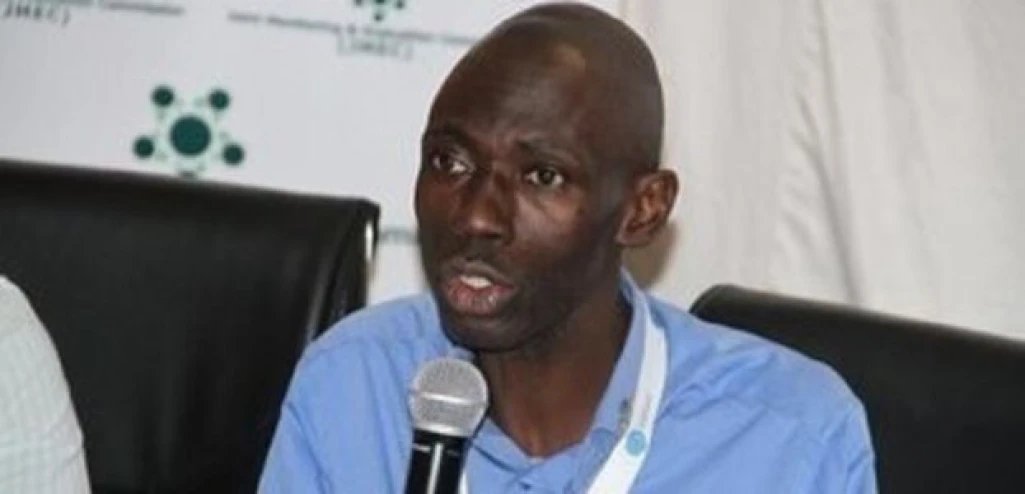
Edmund Yakani, head of the Community Empowerment for Progress Organization | Credit | Courtesy
Civil society activist Edmund Yakani has condemned the killing of Kapoeta East County Commissioner Stephen Lowosio Lomongin and called on the Council of States to urgently intervene to prevent escalation of border tensions between Eastern Equatoria State and the Greater Pibor Administrative Area (GPAA).
Lomongin was killed in Kasengor, a disputed area claimed by
both administrations, while travelling on official duty, after being ambushed
by armed youth. Eastern Equatoria authorities have linked the attackers to
GPAA, allegations that GPAA has rejected.
Kasengor has long been a contested area between the two
sides, with recurring disputes over land ownership and administrative control.
Yakani warned that the killing risks triggering revenge
attacks and wider instability along the border if not urgently addressed.
“We need to see an immediate intervention by the leadership
of the Council of States, a legislative organ mandated to oversee peace and
stability at state level and among states,” Yakani said.
He said disputes over territorial ownership, such as Kessengor,
fall under the responsibility of the Council of States to ensure they do not
escalate into deadly violence.
Yakani also called on President Salva Kiir to summon leaders
from Eastern Equatoria State and GPAA to immediately halt hostilities and
return to dialogue.
Authorities in both Eastern Equatoria State and the Greater
Pibor Administrative Area have called for a national government-led
investigation into the killing as tensions persist over the disputed status of
Kasengor.
He urged communities in the disputed area to avoid
retaliation and warned against manipulation by political actors, saying
civilians would bear the highest cost of continued violence.
He further called for accountability for those responsible
for the killing and for national institutions to address the underlying
territorial dispute.