In his Sunday
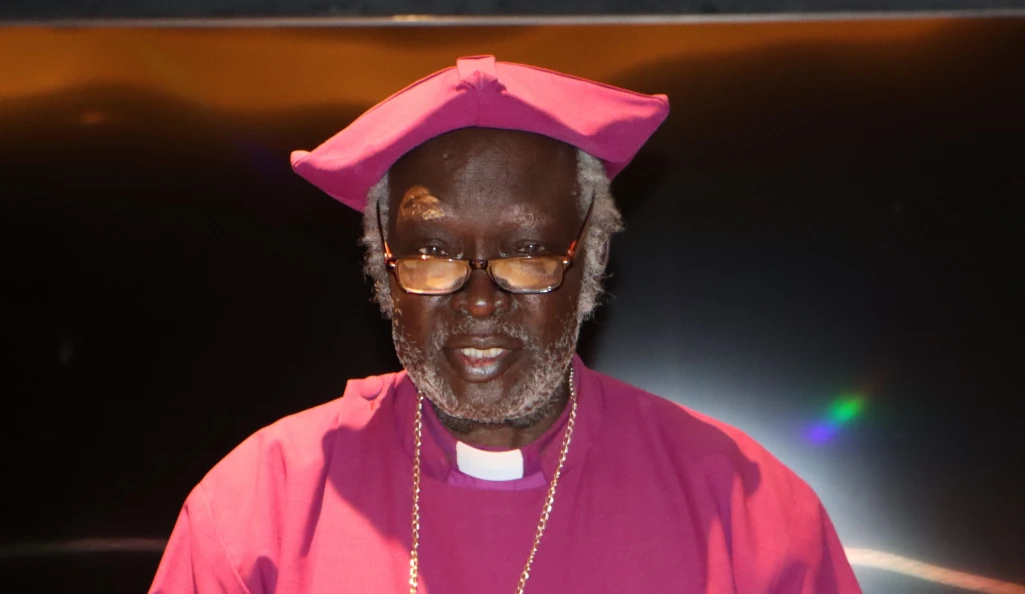
sermon at the Tumaini Initiative in Nairobi, Bishop Enok Tombe, a spokesman of
the religious community, asserted that genuine peace can only be achieved
through reconciliation and healing.
On April 5,
2022, the Government of South Sudan launched public consultations to initiate
the establishment of the Commission for Truth, Reconciliation, and Healing
(CTRH).
These
consultations were designed to collect citizens' perspectives to shape the
legislation for the CTRH, a vital element of the transitional justice
mechanisms outlined in the 2018 Revitalized Agreement on the Resolution of the
Conflict in the Republic of South Sudan (R-ARCSS).
Bishop Tombe
said, “People are even asking, what is wrong with you, South Sudanese? They ask
us, ‘What is wrong?’ And we are unable to answer this question. But I want to
say, what is wrong with us is that we are traumatized, and we have a culture of
violence. We must change that, even in our talking.”
He noted that
while attending the Tumaini peace talks, which began on January 20, 2025, both
parties, the government delegates and the opposition, seem not to face one
another.
“When I
showed, people were heating up. For example, they were saying, “You have no
problem. If you have no problem, why are we here? Oh, you return home, Now,
this is an individual level. What about at the level of the community? I
invited the government delegation for [fellowship], but they didn't show up,” the
church leader stated.
“They were
staying in another hotel. So, I contacted one of them and said, some of them
are going to their families, but we have an operation here.”
Tombe says
there is no way people can reconcile without talking to each other, face to
face.
“It is
unfortunate that the government is taking another hotel. We should have been
here; we can talk during breaks, during meals, and so on, and even in groups.”
Bishop Tombe
puts emphasis on reconciliation as the only aspect to attaining peace among the
leaders and the country at large.
He said the
parties do not have to wait until the agreement is signed; they have to
exercise together by sitting, talking, and drinking together at one table to
exercise brotherhood and sisterhood.
“The agreement provided for that there
should be permission for cruise, reconciliation, and healing. Unfortunately,
our leaders up to now have not implemented it. That is why we are still
traumatized. Now, here in the Tumaini, they are discussing; the government is
saying they have implemented 10 percent of the R-ARCSS, the agreement, in six
years. Since 2018, up to now,” he added.
Bishop Tombe
questions how the remaining 90% will be implemented.
“So, for me,
we may not be able to implement everything, because the government now extended
this term for another two years, this year, 2025, and 2026, followed by
elections. So, for me, we should focus on priority areas, like elections,”
Bishop Tombe suggested.
Tombe said
reconciliation is the end result. It is like the roof, where the prerequisites
are truth, forgiveness, justice, and peace.