In an
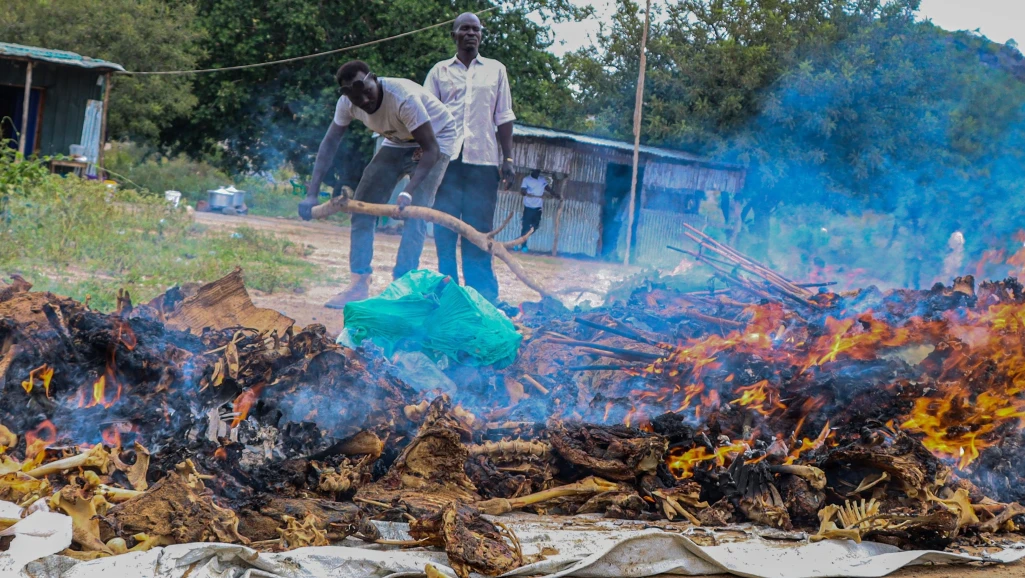
endeavor to effectively combat poaching, the Ministry of Tourism and Wildlife on
Monday set on fire three containers that contained bushmeat.
The three
containers held 167 bags of meat from warthogs and antelopes, as well as the
skins of leopards, crocodiles, and cheaters.
According to
the census, South Sudan has the greatest land mammal migration in the world.
Poaching is
prohibited and needs to stop, according to Col. John Adiu Chol, Director of
Operations in the Ministry of Tourism and Wildlife.
"We have
meat from the bush. We burned 167 bags of bush meat, including gazelle, [tiang,
ding-ding], antelope, and many more, here in the wildlife store. In the regions
of Badingilo, Jonglei Landscape, Lafon, and Torit, the campaign to combat the
sale of bush meat has been ongoing for at least several months," Adiu
said.
“We shall
have the next operation crackdown in 10 days around 15 November; we are giving
this period of time to charcoal burners and poachers to leave all the 6
national parks and the 12 game reserves."
He claims
that during the operation, the court heard about 64 cases involving those who
caught bush meat.
He urges the
entire population to conserve wildlife.
“I want to
tell South Sudanese, wildlife is ours; let's conserve it, and to my brothers in
the army, be the pillar of protecting wildlife.”
For his part,
Maj. Joseph Lumori Thomas, the director of public relations, reiterated the
need to protect wildlife and the environment for tourism purposes.
“We have
Paqueline; it is a lot in Juba from Badingilo and Rumbek National Park; they
are really a lot; they are brought to Juba and then sent to other destinations
outside Juba because there are people who want to steal and sell them outside;
for example, two months ago, some were caught at the Nimule border; they will
actually be brought to Juba, so the case is on,” he stated.
“We are
requesting the people of South Sudan; this is our resource; it doesn’t belong
to wildlife; let's all protect it."
Despite its
history of struggle, South Sudan's ecosystems remain largely intact, serving as
sanctuaries for a diverse range of wildlife.
The sprawling
savannas and lush forest are home to the last few populations of species found
in the country, such as the African elephant, Nubian giraffe, and cheetah.
It confirmed that South Sudan hosts the largest land mammal migration in the world, where an antelope migration consists of approximately six million animals, including the white-eared Kob, tiang, Mongalla gazelle, and Bohor reedbuck.