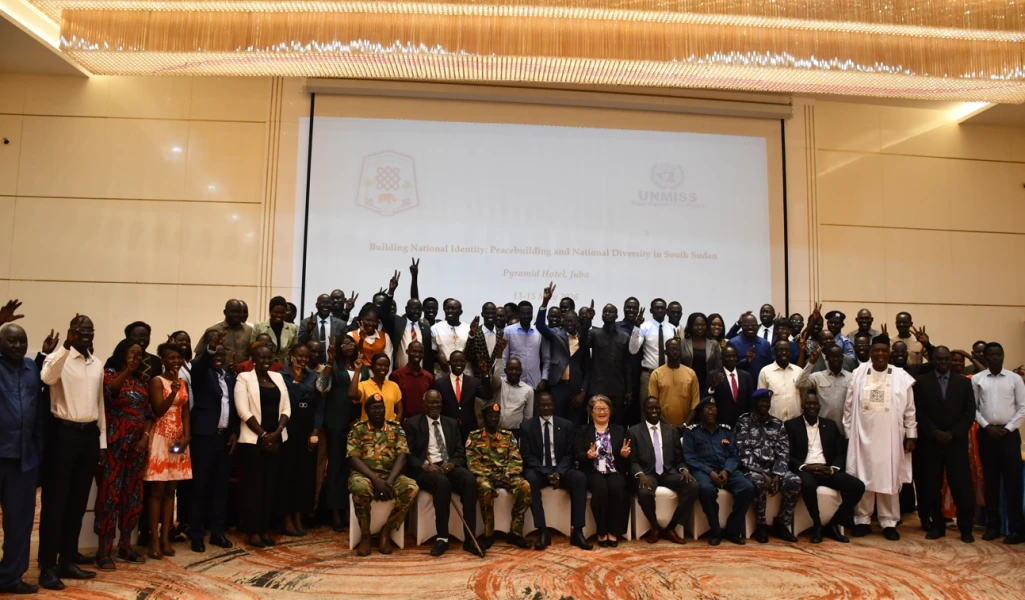
The University of Juba, in partnership with the United Nations Mission in South Sudan (UNMISS), has opened a three-day dialogue in Juba aimed at strengthening national identity, peacebuilding and inclusive nation-building in South Sudan.
The forum, themed “Building National Identity: Peacebuilding
and National Diversity in South Sudan,” brings together government officials,
academics, civil society representatives and development partners to discuss
how diversity, citizenship and shared values can contribute to national unity.
Organized by the School of Law at the University of Juba in
partnership with UNMISS, the dialogue is part of broader efforts to support the
country’s ongoing constitution-making process and civic education initiatives.
Dr El Faki Chol, Dean of the School of Law at the University
of Juba, said national identity remains central to peace and cohesion in a
diverse society.
“South Sudan needs strong national identity. But how to make
it, how to bring people together is a challenge, and that needs constitutional
recognition,” Chol said.
“It is a collective bond created by shared history and
shared social values, giving individuals a unified sense. You have language,
social values, norms, beliefs and traditions, and all these things can bring
people together.”
He said one of the key challenges is the tendency for ethnic
identity to override national identity, affecting unity and social cohesion.
Chol added that national identity should not be reduced to
passports or identity cards, but understood as a deeper sense of belonging
rooted in shared experience and culture.
Dr Riang Yer Zuor, Chairperson of the National
Constitutional Review Commission (NCRC), said the dialogue is directly linked
to the country’s post-conflict constitution-making process.
“The current constitution-making is a post-conflict process,
which seeks to achieve a number of goals. Among these goals are reconciliation
among citizens, unity of the country, and building a national identity,” Zuor
said.
He added that recommendations from the forum would
contribute to ongoing civic education and national consultations across the
country.
Ndubisi Obiorah, Senior Political Affairs Officer at UNMISS,
said managing diversity remains a challenge for many multi-ethnic states,
including South Sudan.
“Most African countries are multi-ethnic societies. Many
African countries have gone through the same challenge. And here in South
Sudan, we see that, among other issues, the challenges of national diversity
are among the causes of conflict,” Obiorah said.
“We hope, at the end of this exercise, to generate
recommendations from the people of South Sudan, which will be shared with the
National Constitutional Review Commission responsible for drafting a new
permanent constitution for South Sudan.”
The three-day dialogue will continue with discussions on citizenship and nationality, legal and constitutional frameworks, gender inclusion, cultural identity, civic participation, and the role of youth, diaspora and social media in shaping national narratives.