The United Kingdom has announced £2.35 million (about $3.15 million) to help South Sudan prepare for El Niño risks, as government planning scenarios identify millions of people potentially exposed to drought and flooding.
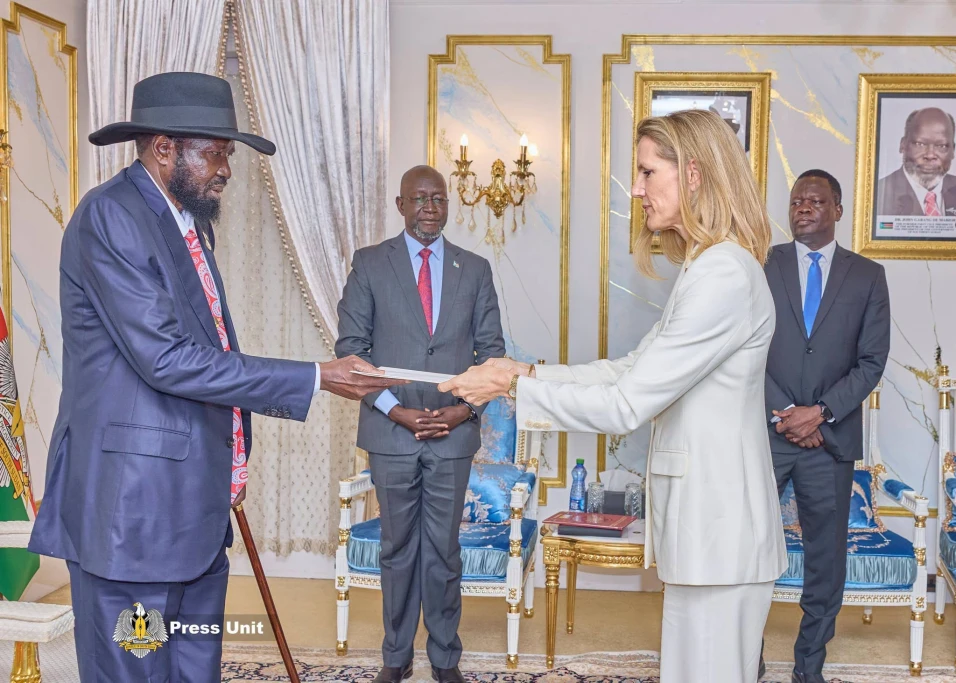
UK Ambassador Rebecca Fabrizi announced the funding on Wednesday in a
statement following the presentation of her Letters of Credence to President
Salva Kiir Mayardit.
“Just this week we are announcing £2.35 million additional
funding to mitigate the risks of El Niño,” Fabrizi said.
In September, the UK announced a £15 million initiative to
help countries prepare for El Niño-related drought, flooding and food
shortages. It remains unclear whether South Sudan’s £2.35 million allocation is
part of that initiative.
South Sudan’s government planning scenarios identified 1.7
million people at risk from drought and another 838,000 in a separate flood
scenario.
The Famine Early Warning Systems Network (FEWS NET) reported
in October that rainfall between June and September 2026 was substantially
below average in parts of the country, with totals below 60 percent of average
in Greater Upper Nile and Central and Eastern Equatoria. The deficits threaten
crop production and could worsen food insecurity.
FEWS NET warns that reduced harvests associated with El
Niño, combined with conflict and other shocks, could lead to particularly
severe food insecurity in Jonglei and southern Upper Nile, with the most acute
conditions expected between May and September 2027.
The forecast for the October-to-December rainy season points
to another risk. The IGAD Climate Prediction and Applications Centre (ICPAC)
expects above-normal rainfall across much of the Greater Horn of Africa,
alongside warmer-than-average temperatures across South Sudan and several
neighbouring countries.
More rain could replenish water sources and improve pasture
in some areas, but heavy downpours could also flood farmland, damage
infrastructure and cut off communities. Government officials warned in
September that rainfall upstream in the Lake Victoria basin and neighbouring
countries could increase the risk of riverine flooding, particularly in
flood-prone parts of Unity, Jonglei and Upper Nile.
Fabrizi said the UK had previously helped nearly 100,000
people in South Sudan adapt to climate change and would continue supporting
resilient livelihoods and the sustainable use of natural resources. She also
announced a separate £10.7 million contribution to the Health Sector
Transformation Project.
“If they are well managed, South Sudan's extraordinary
natural assets could offer tremendous promise for future prosperity for the
whole population,” she said.
For communities already coping with poor rainfall, the challenge is to protect harvests and livelihoods from drought while preparing for possible flooding during the coming rainy season.