Ugandan police deployed
heavily around Kampala City on Monday to forestall planned protests by the
youth against corruption in government.
In what reflects methods
used by their counterparts in Kenya, where the youth, popularly referred to as
Gen-Z, pushed President William Ruto to drop the controversial Finance Bill,
2024 and sack the Cabinet, the Ugandans have been mobilising online, particularly
on social media.
Party leaders arrest
Meanwhile, security
agencies on Monday deployed at junctions and roundabouts leading to and from
the city centre, including Busega on the Kampala-Masaka highway, and
Constitutional Square, which was akin to a makeshift barracks.
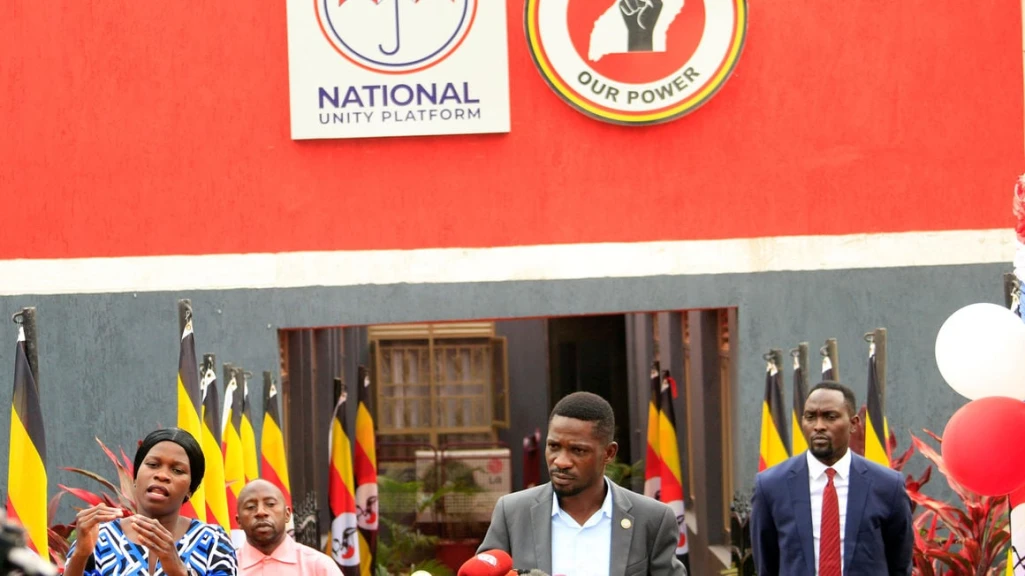
The National Unity
Platform headquarters in Makere-Kivulu, where the party was set to hold a press
briefing, was cordoned off by the Army and police, and the party Vice-President
Lina Zedriga was arrested and bundled into a police vehicle.
A car belonging to
another party leader, Mityana Municipality MP Francis Zaake, was towed by the
police while he was still behind the wheel.
The police spokesperson
termed the arrests “a precautionary move” ahead of planned anti-government
protests on Tuesday.
“We cannot surrender
this country to such reckless processions. Whenever we have reliable
intelligence that certain activities are likely to disrupt order, we heighten
our deployment. NUP called everyone from all walks of life. We are saying the
longer you take to recognise the rights of others, the longer you will not
enjoy your rights too,” Kituuma Rusoke said.
On the social media
platform, X, NUP party leader Robert Kyagulanyi aka Bobi Wine confirmed the
siege on his party headquarters.
“They have turned the
National Unity Platform headquarters into a military barracks. Several leaders
have been violently arrested. They have now blocked the roads leading to the
office. All because they are scared of the people. And, yes, when we lose our
fear for them, they will lose their power over us,” said Bobi Wine.
Youth mobilise
Bobi said his party
supports the protest, even though he disassociated his movement from organising
it.
“The effort by the
regime to clamp down and make it look like an NUP initiative is meant to weaken
it because they want to make it appear like a partisan matter,” said Bobi. “The
#AntiCorruptionProtests as we know them are organised by the young people of
Uganda regardless of their age, religion, tribe or political
affiliation!”
“But we support them
with all our might because we are #PeoplePower and we absolutely believe in the
Power of the People. We support every effort to protest against injustice,
corruption and misrule,” he added.
Museveni warnings
President Yoweri
Museveni warned protesters that they would be "playing with fire" if
they press ahead with plans to stage a march to parliament on Tuesday.
In a televised address,
the President said: "We are busy producing wealth… and you here want to
disturb us. You are playing with fire because we cannot allow you to disturb
us."
Like his Kenyan
counterpart Ruto, Museveni accused the protest organisers of "working with
foreigners" to cause chaos in Uganda.
On Saturday, the
President had warned the youth against the protests, alleging they were
sponsored by foreigners.
"Some elements,
some of them from the opposition, are always working with the foreigners to
foment chaos in Uganda – riots, illegal demonstrations, illegal and
inconsiderate processions, etc. These people ... should check themselves or we
shall have no alternative but to check them," he said.
The police refused to
permit the march, but the protesters said they did not need permission to
picket.
"We don't need
police permission to carry out a peaceful demonstration. It is our
constitutional right,” said one, Louez Aloikin Opolose.
In a mobilisation that
has taken over a month, the group, which identifies itself as youth affiliated
to no party, no religion, no tribe and with no leadership, sought permission
from the police, which was declined, with security officers warning the organisers
not to disrupt business.
A message to all police
units in the country released last week ordered high alertness and preparedness
ahead of Tuesday's demonstration after President Museveni warned that
demonstrators would not be allowed to proceed with their plans.
The Kampala planned
protests if they take place, will be a part of a wave gathering momentum on the
continent as African youth move to the forefront in seeking changes in the way
their states are run.
In Ghana, youth have
been planning similar protests.
Kenyan protests
In Kenya, the Gen-Z
protesters were on Monday raring for the weekly Tuesday marches to push
President Ruto to effect sweeping governance changes, even as others said he
should resign.
Read: Kenya rocked by protests
But, speaking on Sunday
in Bomet in the South Rift region, President Ruto said “Enough is enough” about
the protests that have claimed more than 50 lives across the country, the
majority blamed on the police.
“I want to promise it is
going to stop. Enough is enough!” he said.
The Kenyan leader on
Friday unveiled a new Cabinet of “the first” 11 members, six of whom were
retained from the previous Cabinet, something that angered those opposed to
him.
“We will protect life,
we will protect property, we will stop the looters, we will stop the killers,
we will stop the mayhem, we will stop anarchy because Kenya is a democracy and
we want a peaceful, stable nation. Our issues are resolved using democratic
means,” the President said.
But in a defiant move,
the youth said they would #OccupyEverywhere on Tuesday and Thursday.
The decision to retain
some of the cabinet secretaries has angered a majority of the citizens, who
accuse him of recycling the people they want out.
Calls for dialogue
The demonstrations
initially started as a protest against the Finance Bill in June which the
president eventually shelved after protesters stormed Parliament on June 25
when it was passed.
“They said we should not
pass the Finance Bill, and I dropped it. Then I called them, and they said they
didn’t want to come for talks with me. They told me to go to X [spaces], and I
went there, but they ran away,” the president said.
“Then they told me to
call for a national dialogue, I have called for dialogue, and now they have
refused. They are still saying they are faceless, formless. I have given
everyone a chance to say whatever they want. I cannot continue like this. The
country is much more important than any group of people. We must come together
as a nation, protect our nation, and ensure that Kenya is a democracy. Anyone
who has issues should use the front door and tell Kenyans what they want.”