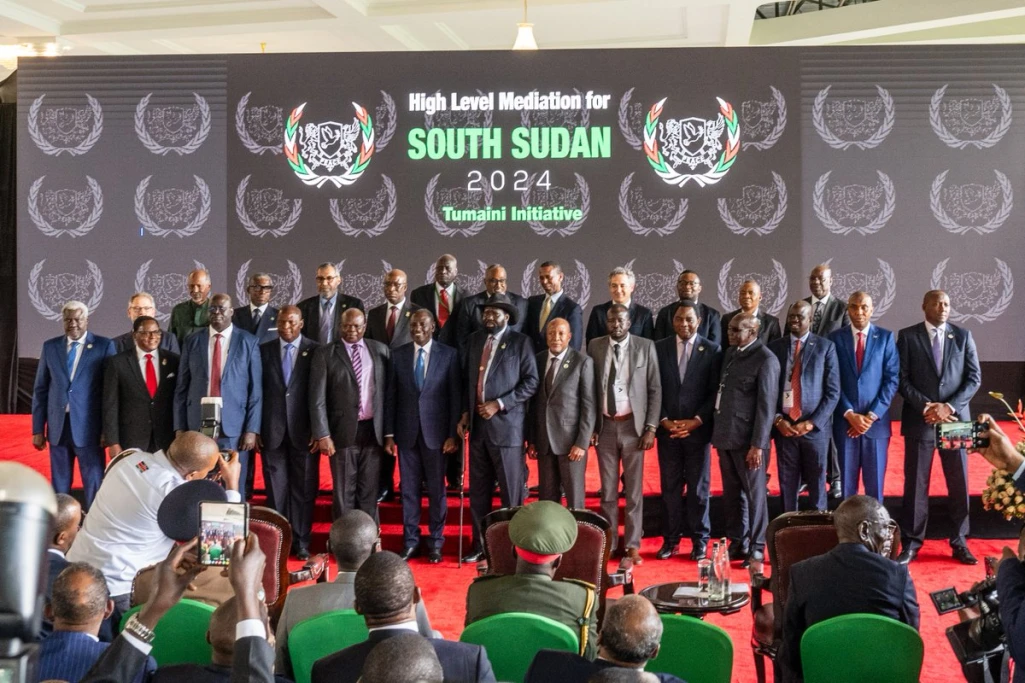
The ongoing deadlock in the Tumaini Initiative in Nairobi,
Kenya, has caused an increasing sense of frustration among South Sudanese
citizens.
The deadlock regarding the previously initialed protocols,
which threatens to derail the peace process, has sparked doubts about the
parties' dedication to achieving lasting peace in the country.
While the political impasse lingers, citizens across the
country are urging all parties to reach a consensus for lasting peace.
Maria Akon, from Northern Bahr el Ghazal, exhausted by the
prolonged violence, expressed her plea for continuity in the talks instead of
going back to previously agreed protocols.
"We need peace; we are tired of violence. It will be
good for the new government delegations to start from where the former
delegation left off and continue instead of disagreeing again,” Maria pleaded.
For many South Sudanese who expressed themselves through a
peace platform offered by this publication, the Tumaini Initiative represents
the last opportunity to resolve the nation’s long-standing conflicts.
"We the citizens express optimism about the Tumaini
Initiative, viewing it as a crucial step towards achieving lasting peace in
South Sudan. I personally believe that including opposition parties that did
not sign the 2018 agreement is essential for a comprehensive resolution to the
conflict,” said Aguek Mayot from Warrap State.
Jacob Mawut Deng, a resident of Jonglei State, added, “If
they sign peace, it will end road ambushes and cattle raiding, and all the
rebels will join the government in Juba to develop their own country.”
However, hope is tempered by doubt, as several citizens
voiced their disappointment with the government’s handling of the peace
process.
Aweil resident who identified himself as Sibu Kede
criticized the lack of progress and accused the government of delaying the
process.
"From the side of the government, we do not see any
hope that there will be peace. It is good for the government to continue from
where the talks stopped with the former delegation. Contradiction and
disagreement lead to delays in bringing peace. We, the citizens, lost hope in
the government for failing to bring the final peace to the country,” he stated.
Tong Tong, from Warrap State, echoed these sentiments,
highlighting ongoing disagreements and the government delegation's failure to
meet deadlines.
"We are frustrated with the delays in the peace talks.
The fact that the discussions were adjourned and rescheduled multiple times,
particularly the government delegation’s failure to arrive in Nairobi as
scheduled, raises questions about their commitment to reaching a consensus,”
Tong explained.
The initiative, launched on May 9, 2024, aims to achieve
lasting peace in South Sudan by incorporating opposition parties that did not
sign the 2018 peace agreement.
But two months after its launch, the talks stalled due
to divisions within the government delegation following the SPLM-IO's
withdrawal. The peace talks resumed in December 2024 after the government
unified its position.
Despite the president's directive to conclude the talks
within two weeks, the parties failed to reach an agreement. The discussions
were adjourned and rescheduled for January 6th due to a new deadlock over the
previously agreed-upon protocols.
However, the government delegation delayed and was unable to
arrive at the venue for the resumption of the talks on January 6, leading the
opposition to express concerns about the government's commitment to the peace
process. The delegation on Wednesday announced that they will be in Nairobi on
January 18 for talks resumption.
Others believe that the success of the Tumaini Initiative
will determine the resolution of several issues. Aweil resident William
emphasized the urgent need for a resolution to pave the way for elections:
"It is good for the politicians to understand
themselves and bring final peace into the country through Tumaini talks because
if peace does not come, elections will not take place in this nation," he
said.
Luka Atak Dut added, "We need peace as South Sudanese.
With peace, South Sudan would be able to develop quickly, and elections will be
done to choose leaders of their choice."
James Ngong Ayuen from Bor town explains the broader impact:
"Our hope is to end conflict to improve the economy. If our leaders are
united, it will end this current situation facing citizens in their free
land."
Amid the frustrations and calls for accountability, Mama
Awut highlighted the importance of prioritizing the people over politics.
"We are demanding accountability from the government
and the involved parties. We are calling for transparency in the negotiation
process and are urging leaders to prioritize the welfare of the South Sudanese
people over political interests," Awut stated.
Magingo Bak from Warrap State underscored the urgency for
action, warning of the consequences of further delays in reaching consensus.
"With the ongoing instability and humanitarian
challenges in South Sudan, I am urging a swift resolution to the deadlock. I
emphasize the need for the government delegation to arrive in Nairobi promptly
and engage in meaningful discussions to avoid further setbacks," he
warned.
Despite the delays and growing frustration among citizens,
both the government delegation and the opposition expressed confidence that a
consensus will be reached in the upcoming round of discussions expected to
begin next week.
The Tumaini Initiative remains a beacon of hope for South Sudan's citizens, who continue to long for an end to the violence and a path to lasting peace. While their voices echo with optimism, the burden remains on the leaders to fulfill this shared aspiration.