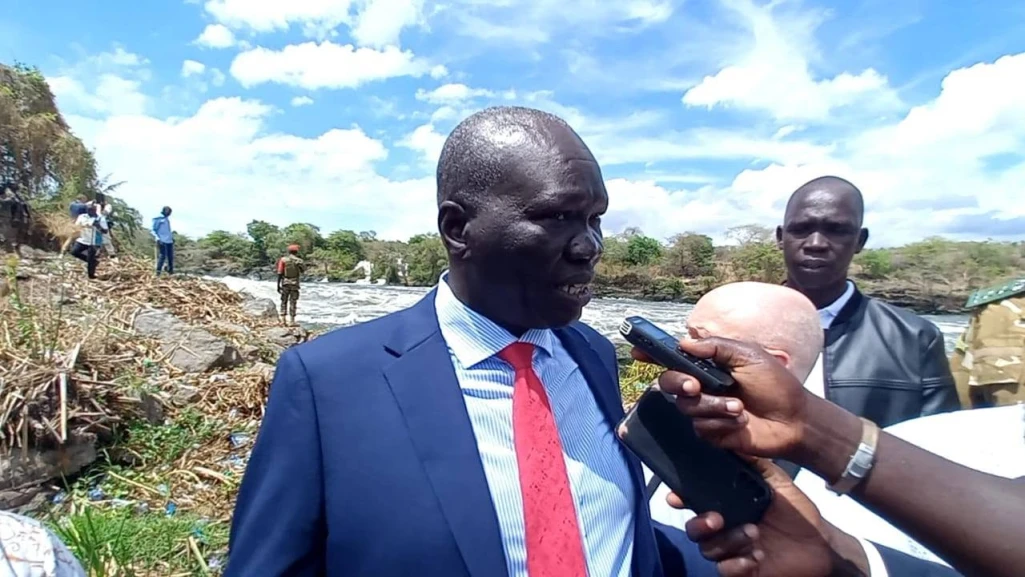
South Sudan says it has no fear of Egypt as it moves to
build dams, including the proposed Fulla Dam, Energy and Dams Minister Agok
Makur said on Thursday.
Makur said Fulla is among 34 projects he said were approved
by the Nile Basin Council of Ministers. The Radio Community could not
independently verify the reported approval of the 34 projects.
He said South Sudan has the right to develop its water
resources as a Nile Basin country.
“So, there is no fear because those countries passing these
projects, part of it is Egypt. We are not fearing to build our dams. As
Minister of Energy, Agok Makur, I’m the one who declared that we are going to
build our dams,” Makur told journalists in Juba.
He said as he signed the Electricity Power Generation
Regulations, 2026, which set out rules for electricity generation and are
intended to strengthen oversight of a sector the government wants to expand.
Makur said he had briefed President Salva Kiir on
preparations for the dam projects and that investors and ambassadors were
approaching the ministry, although he did not identify them or provide details
of the proposed investments.
“I need to confirm to you that we as a Ministry of Energy,
we are ready for building our dams,” he said.
Fulla is planned on the White Nile in Eastern Equatoria near
the Ugandan border. The project has been under development discussions through
the Nile Equatorial Lakes Subsidiary Action Program, or NELSAP, with regional
studies examining its potential to generate electricity and connect South Sudan
to wider East African power networks.
Egypt has historically raised concerns about upstream Nile
projects that it considers capable of affecting its water security. But in
2013, Egypt’s ambassador to South Sudan said Cairo had no objection to the
proposed Fulla Dam.
Egypt’s main dispute over an upstream Nile dam has been with
Ethiopia over the Grand Ethiopian Renaissance Dam, which began generating
electricity while negotiations among Egypt, Ethiopia and Sudan over its
operation remained unresolved.
For South Sudan, where electricity access remains limited
and much of the available power in Juba comes from diesel generation, a large
hydropower project could provide a major source of domestic electricity if it
reaches construction.
South Sudan has maintained relations with both Egypt and
other Nile Basin states while pursuing its own water and energy projects.
The government says the new electricity regulations will
provide a clearer framework for investors and institutions involved in power
generation as it seeks to expand electricity supply.
Makur did not say when construction of Fulla Dam would begin or provide details of its financing.