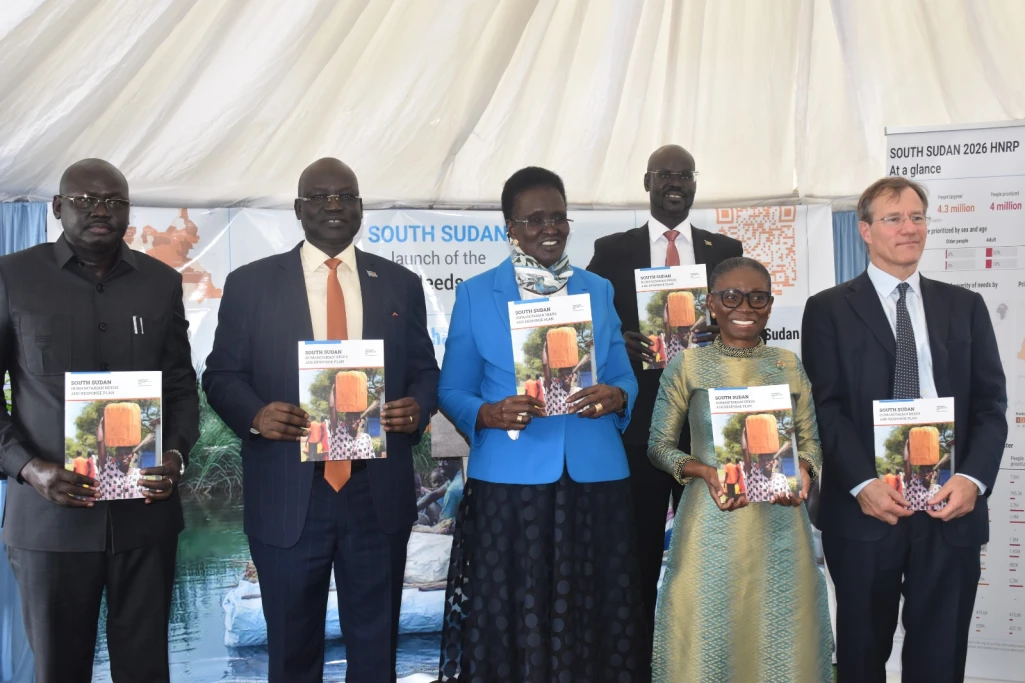
South Sudan plans to provide humanitarian assistance to 4.3 million people in 2026, down from 5.4 million in 2025, even as needs rise due to conflict, climate shocks, and spillover from the war in neighboring Sudan.
The 2026 Humanitarian Needs and Response Plan (HNRP) was
launched on Tuesday in Juba. Officials said the revised target reflects a more
focused and accountable approach to aid delivery.
Deputy Special Representative of the UN Secretary-General,
UN Resident and Humanitarian Coordinator for South Sudan, Anita Kiki Gbeho,
said more than 10 million people in the country will need assistance next year.
“This crisis is driven by conflict, displacement, economic
shocks, and climate-related disasters. These are not small challenges, and they
do not affect only one county or one region. They affect the entire country,” Gbeho
said
Gbeho said 7.5 million people face crisis-level hunger,
including around 28,000 experiencing catastrophic hunger (IPC5).
Funding remained a major constraint in 2025, with aid
agencies receiving only 43% of requested resources, reaching four million of
the 5.4 million targeted.
The 2026 plan will aim to assist 4 million people with an
estimated budget of over $1 billion, prioritizing protection for women,
children, elderly persons, and people with disabilities.
“Our success will be measured when schools function, when
women receive care, and when communities enjoy peace,” Gbeho said.
Humanitarian Affairs and Disaster Management Minister Albino
Akol Atak welcomed the plan, highlighting the strain caused by 1.3 million
Sudanese refugees who have arrived since the conflict began.
“The arrivals from Sudan have overwhelmed border towns and stretched the capacity of local communities. This situation requires solidarity, shared responsibility and continued support,” Atak said.
Rebecca Nyandeng de Mabior, Vice President for Gender and Youth Cluster, called for peace and stability, saying humanitarian needs will remain high as long as conflicts persist.
“Peace is the greatest humanitarian assistance our people
can receive. When there is peace, mothers do not struggle to feed their
children, families do not abandon their homes, and our young people look to the
future with hope instead of fear,” Mabior stated.
Humanitarian partners stressed that timely funding and access will be critical before the rainy season and as more people continue arriving from Sudan.