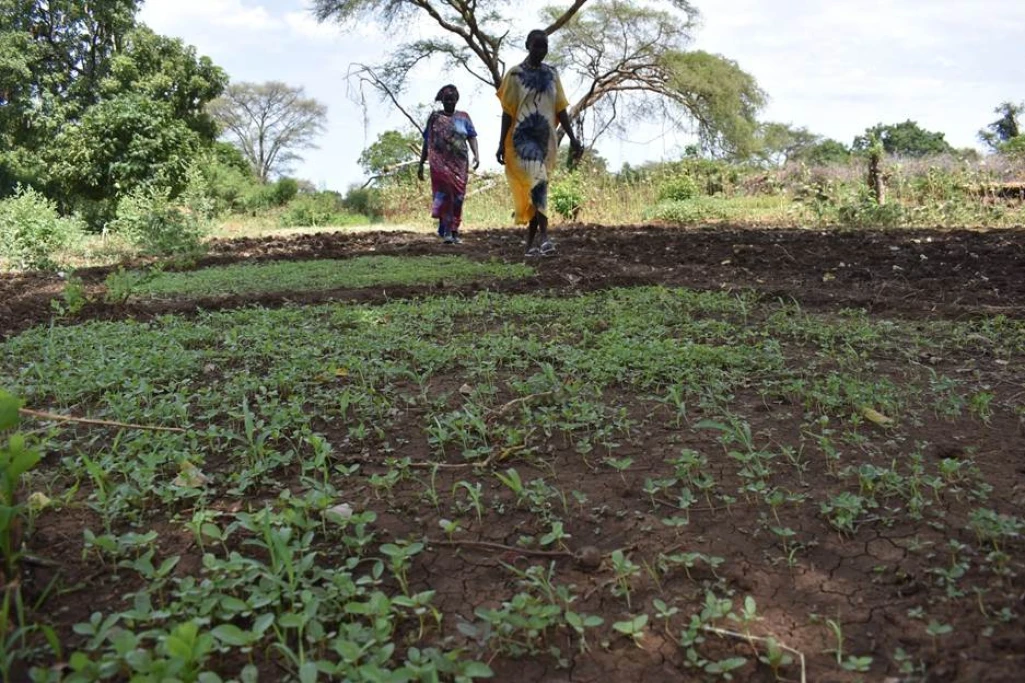
South Sudan is among 11 countries targeted for more than $50 million in United Nations emergency funding to prepare for El Niño, as government planning scenarios warn of potential drought and flooding affecting millions of people.
Tom Fletcher, the UN under-secretary-general for
humanitarian affairs and emergency relief coordinator, announced on October 21
that he had released the money from the Central Emergency Response Fund (CERF)
to help countries prepare for climate-related shocks before they escalate into
humanitarian emergencies.
Chad, El Salvador, Ethiopia and Somalia were among the other
countries named. The UN did not specify how much of the funding would go to
South Sudan or each country.
The funding will support anticipatory action, including cash
assistance for vulnerable families, measures to protect crops and livestock,
and moving humanitarian supplies before floods cut off roads and isolate
communities.
“We call on countries, on development banks, on
international financial institutions to get the funding moving to this work
before that damage is done, not afterwards,” Fletcher said.
Drought and flood risks
At an IGAD regional high-level forum on El Niño preparedness
in Addis Ababa, Charles Placido, director of emergency preparedness and
response at South Sudan’s Ministry of Humanitarian Affairs and Disaster
Management, outlined government planning scenarios covering about 1.7 million
people under a drought scenario and 838,000 under a separate flood scenario.
The projections come as rainfall deficits and crop failures
have already been reported across parts of South Sudan. A September assessment
by the Famine
Early Warning Systems Network (FEWS NET) found that cumulative rainfall in
the worst-affected eastern and southeastern areas was below 60 percent of
normal.
The assessment documented crop failures in parts of Jonglei,
Northern Bahr el Ghazal, Lakes, Warrap, Unity, Central Equatoria and Eastern
Equatoria. In Lafon and Greater Kapoeta, poor livestock conditions and
unusually early livestock migration were reported amid shortages of pasture and
water.
FEWS NET’s October regional
outlook projected that El Niño-related reductions in the 2026 harvest could
deepen food consumption deficits, with the most severe impacts expected in
Jonglei and southern Upper Nile between May and September 2027.
The World Meteorological Organization warned on October 21
that the developing El Niño could become exceptionally strong, affecting
rainfall and temperatures in different regions. Its outlook said sea surface
temperatures in the tropical Pacific could reach 3.8 degrees Celsius above
average between November 2026 and January 2027.
El Niño is a natural climate pattern that alters rainfall
and temperature around the world, increasing the likelihood of drought in some
regions and heavy rainfall and flooding in others.
Fletcher said about 50 million people globally could face
increased hunger because of the phenomenon. He also cited an African
Development Bank estimate that El Niño could cost African countries between $10
billion and $20 billion and reduce gross domestic product by 1 to 2 percent.
UK announces £2.35 million for South Sudan
The United Kingdom has also announced £2.35 million,
equivalent to about $3.15 million, to help mitigate El Niño-related risks in
South Sudan.
UK Ambassador Rebecca Fabrizi announced the funding on
October 21, saying Britain would continue supporting communities to adapt to
climate change and strengthen their livelihoods.
Fletcher said the coming weeks are critical for
preparedness, urging governments, development banks and humanitarian partners
to make funding available before communities suffer losses.