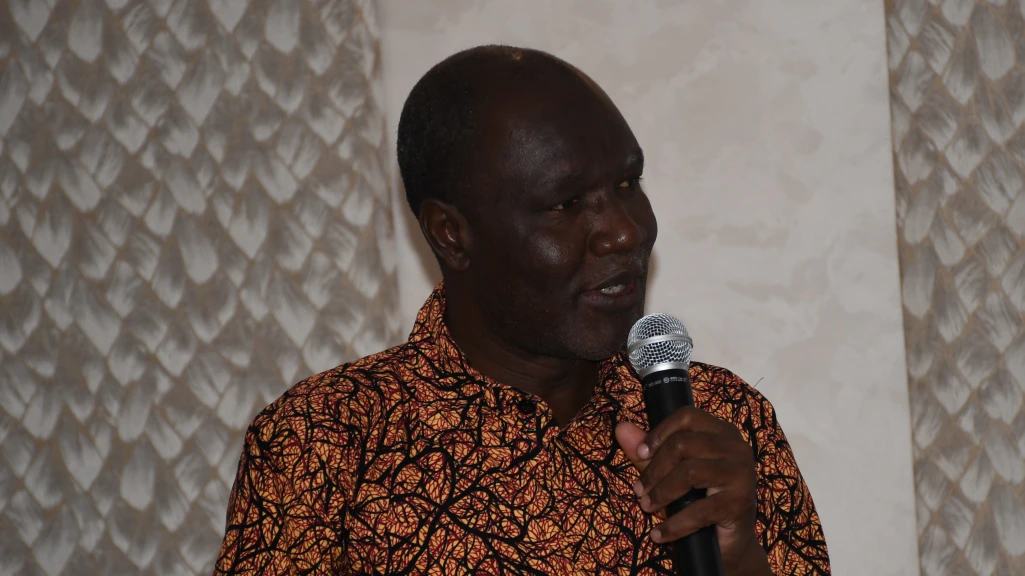
The commissioner of Yei River County in Central Equatoria
State has echoed that certain women entice young girls to participate in the
sexual trade in urban areas.
Speaking at the launch of the Sexual and Gender-Based
Violence (SGBV) initiative in Juba on Wednesday, Aggrey Cyrus Kanyikwa said that the
nation's economic circumstances are to blame for the increase in sexual
activity.
“We now see that there are some women who are now trading
with young girls that are lured from their homes, disappear from their homes,
and appear to be in Juba for sexual trade. This is a new scenario that has
emerged in the last two months,” Cyrus said.
Cyrus also noted that one of the main reasons early
marriages occur is family poverty.
"We also have this scenario where girls at a young age
decide to go to marry because their family no longer can afford to give them
meals, pay the school fees, or afford to give them dressings or social needs
that they need,” Cyrus explained.
“So, these are new scenarios that have been happening
because of the economic crisis that is happening in South Sudan.”
The commissioner encourages families to practice small-scale
businesses that would reduce cases of poverty.
“I am encouraging that each family engages in microfinance
and engages in agriculture production that should be commercialized in a sense
to meet food security and to meet social expenditures or livelihoods in their
families,” he stated.
The commissioner further explained that the government is
committed to engaging women in economic activities despite insufficient funding
from the partners.
For his part, Emmanuel Tete Ezbon, commissioner of Juba
County, refuted the claims of sexual trade in Juba.
“What we have been hearing outside is just a kind of rumor.
What is happening outside against gender is just happening at the level of IDP
camps. That is what was registered a few months ago,” Tete explained.
The U.S. Department of State report states that domestic
servitude is a widespread risk for South Sudanese women and girls, especially
those who are internally displaced or come from rural regions.
It claimed that some of these women and girls are sexually
abused by the male residents of these homes, and they may even be used as props
for commercial sex.
It also exposed the occasional exploitation of women and
girls in domestic servitude by well-known South Sudanese citizens in both rural
and state capitals.
According to the research, South Sudanese females are
trafficked for sex by foreign and South Sudanese businesses who take advantage
of them in metropolitan restaurants, hotels, and brothels. Sometimes, corrupt
law enforcement authorities are involved in this illicit trade.