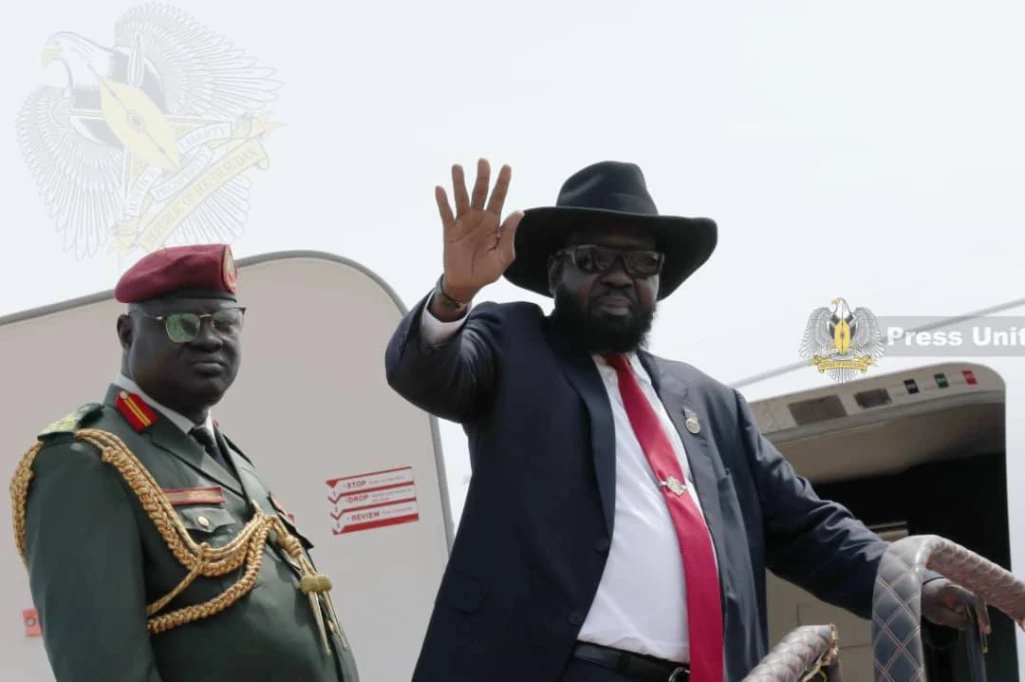
President Salva Kiir traveled to Addis Ababa on Friday for talks with Ethiopian Prime Minister Abiy Ahmed, in a visit that comes as regional efforts to support South Sudan’s peace process continue.
In a statement, Kiir’s office said the visit is part of
ongoing bilateral engagements between South Sudan and Ethiopia aimed at
strengthening cooperation and deepening ties between the two countries.
It is Kiir’s second visit to Ethiopia this year. The trip
comes as a delegation from the African Union Peace and Security Council, led by
Ethiopia, is in Juba for a three-day visit to engage key stakeholders on South
Sudan’s peace process.
The delegation is led by Ambassador Hirut Zemene Kassa,
Ethiopia’s permanent representative to the African Union and the United Nations
Economic Commission for Africa.
Kiir last visited Addis Ababa on February 13 to attend the
39th African Union Summit, where a C5 High-Level Ad Hoc Committee meeting on
South Sudan was held on the sidelines.
The C5, a group of African countries mandated to support
South Sudan’s 2018 peace agreement, discussed implementation of the revitalized
peace deal (R-ARCSS), the security and political situation, and preparations
for elections planned for December 2026.
The visit also comes amid ongoing political and security
challenges in South Sudan, including delays in implementation of the peace
agreement.
First Vice President Riek Machar, leader of the SPLM-IO and
a key signatory to the 2018 peace deal, has been detained since March 2025 and
faces treason charges before a special court in Juba over his alleged role in
violence last year.
The opposition SPLM-IO is currently being run on an acting
basis by Machar’s deputy, Oyet Nathaniel Pierino, who is in exile.
Tensions between Kiir and Machar have slowed progress in
implementing the peace agreement, raising concerns among international actors
over the future of the deal.
Meanwhile, the security situation remains fragile,
particularly in Jonglei and Upper Nile states, where fighting continues between
government forces and SPLA-IO fighters.