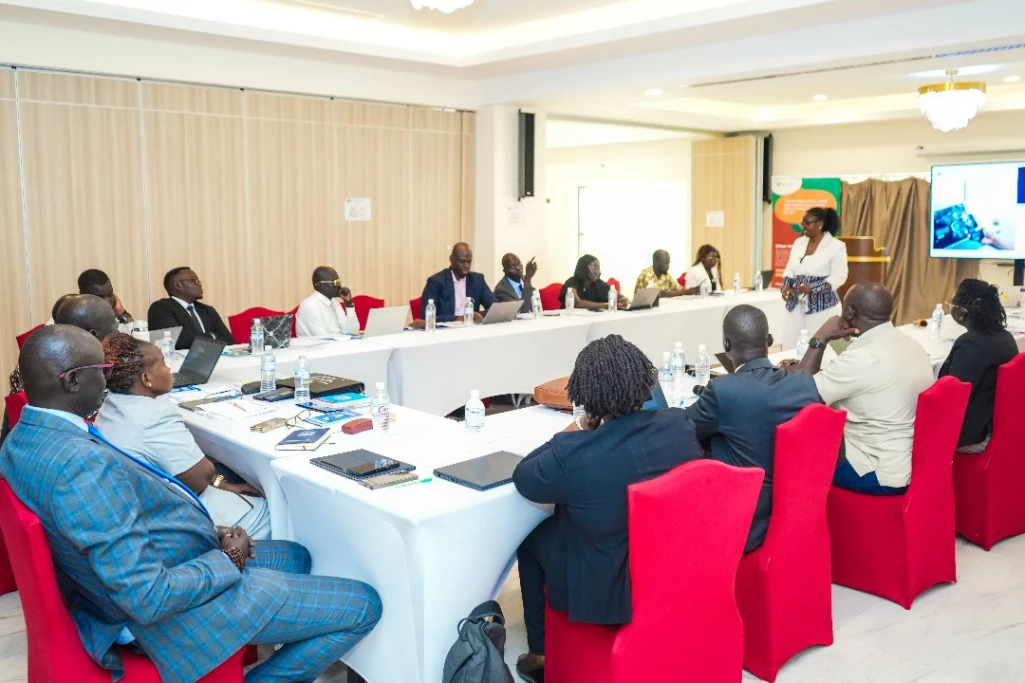
South Sudan advances discussion on human rights–centred data protection as Paradigm Initiative and Koneta Hub host the Digital Policy Engagement Series (DiPES) 2025 in Juba.
Miriam Beatrice
Wanjiru, Programs Officer for East Africa at Paradigm Initiative, said her
organization is committed to advancing digital rights and inclusion across the
continent.
“We are a Pan-African non-governmental organization that
champions digital rights and digital inclusion. We work at the intersection of
technology and human rights,” Wanjiru said.
“I am glad that finally, many months later, we are having
this conversation [in Juba] But I believe it's the best time. Allow me to commend
everyone who's gone before this process to think about, protecting user data,
protecting data subjects, protecting and just drafting an initial bill.”
South Sudan currently does not have a comprehensive data
protection law. Although the 2011 Transitional Constitution guarantees the
right to privacy under Article 22 and the right of access to information under
Article 32, there is no specific legislation addressing data protection.
The Cybercrimes and Computer Misuse Provisional Order of
2021 covers some aspects of digital security but does not fully safeguard data
privacy. This order has now been drafted into a bill, which is before the
Transitional National Legislative Assembly for discussion and enactment.
Nelson Kwaje, Chairperson of Digital Rights Frontlines, said
the push for digital safety and data protection in South Sudan dates back to
2019, when the country held its first Internet Governance Forum.
At the time, much of South Sudan relied on microwave
networks, internet speeds were slow, the Universal Service and Access Fund had
not yet been established, and overall connectivity was limited.
“The issues of data protection were still nascent, as well
as the issues of cyber security. We did not have this influx of online scams
and different types of crimes that are happening online, but now, years later,
we are at a different junction,” Kwaje stated.
He emphasized that as the country discusses the data
protection bill, it should align with the Cybercrime and Computer Misuse Bill,
and stressed the need for a Data Protection Authority, following models in
Kenya and Uganda.
The National Communication Authority (NCA), the country’s
body overseeing policies to safeguard personal data and ensure secure digital
information management, decries the absence of a comprehensive data protection
law and stresses the need for a clear institutional framework.
The authority’s Director of Research and Planning, Chol
Joseph Mayen, said the NCA has refocused its vision through a new five-year
strategic plan, aiming to build a digitally empowered economy that is
prosperous, secure, just, and inclusive.
"Across Africa and around the world, data protection
becomes one of the most valuable resources. Because data is a new oil now in
this era. If you don't control your data and someone else is controlling your
data, that someone is getting a lot of wealth that you deserve,” Mayen said.
In July 2025, the Authority reported that internet users in
South Sudan had grown from 1.3 million in 2024 to 1.9 million at the start of
2025. The country is increasingly connected through mobile money, online
services, e-learning, and social media, which account for the largest share of
data consumption.
Mayen noted that citizens are exposed to numerous digital
platforms that collect and use their personal information, yet there is
currently no law in place to protect them.
“We do not have a comprehensive data protection and privacy
bill in place to safeguard that information. This one is one of our greatest
challenges because without data protection, the digital transformation strategy
that we are yearning for, is not going to be achieved,” he expressed.
The Digital Policy Engagement Series (DiPES) – South Sudan
Edition is a collaborative initiative by Paradigm Initiative (PIN) and Konneta
Hub.
The series brought together government officials, civil
society, academia, and the private sector from 14–15 October 2025 in Juba to
engage in dialogue on key digital policy issues, including data protection,
cybersecurity, and digital rights.