Médecins Sans Frontières (MSF) has issued an urgent demand for increased
sanitation and hygiene measures to combat the cholera outbreak, particularly in
densely populated areas in the country.
The outbreak, declared by South Sudan's Ministry of Health on October 28,
2024, followed laboratory confirmation of cholera cases and evidence of local
transmission in Renk County, Upper Nile State.
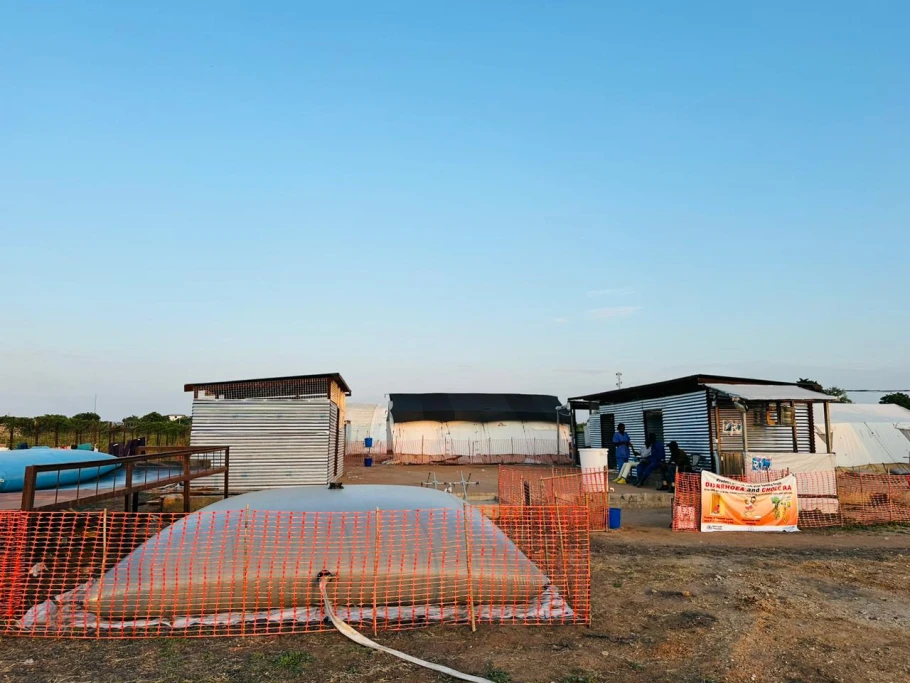
In response, MSF established a 20-bed Cholera Treatment Unit (CTU) at
Renk Civil Hospital. Since its opening, the facility has treated 45 cholera
patients, with two fatalities recorded.
The majority of cases are among refugees fleeing conflict in Sudan, where
a cholera outbreak was declared in August 2024. However, local residents of
Renk have also been affected.
Sanitation Challenges and Increased Risk
MSF highlights that contaminated water sources, open defecation, and
overcrowded living conditions due to the influx of refugees from Sudan pose
significant health risks to both newcomers and the local community.
“Given the inadequate, overcrowded living conditions and the continued
influx of refugees and returnees from Sudan into Renk and Malakal, there is an
urgent need to improve water, sanitation, and hygiene to prevent further spread
of the disease,” said Emanuele Montobbio, MSF’s field coordinator for the Renk
emergency program.
In recent weeks, up to 800 people have been entering Renk daily from
Sudan, exacerbating the already dire conditions.
Rising cholera cases in Malakal
The situation in Malakal is also deteriorating. MSF recently opened a
cholera treatment unit at Malakal Town Hospital in response to a surge in
cases. As of November 12, 2024, the facility has admitted 65 patients in less
than a week.
To accommodate the increasing number of cases, MSF has set up a Cholera
Treatment Center (CTC) in Assosa, located less than 10 kilometers from Malakal
Town Hospital, with a capacity of up to 100 beds.
MSF teams are currently treating cholera patients from Malakal’s
Protection of Civilians (PoC) site, where thousands of displaced people live in
close quarters, increasing the risk of a rapid spread of the disease.
Montobbio emphasized the urgency: “The current response in Upper Nile
does not match the gravity of the situation. We urgently call for stronger,
collaborative efforts from all organizations in Renk and Malakal to prevent a
wider crisis. An immediate reactive vaccination campaign is crucial.”
Call for support and collaborative efforts
MSF is urging other organizations to establish additional treatment
facilities within the PoC sites to prevent further loss of life.
With ongoing movement of people across Upper Nile State and other regions
of South Sudan, the outbreak threatens to spread beyond Renk and Malakal.
“The observed rise in cholera cases is alarming,” Montobbio noted. “We
need a comprehensive and coordinated response to manage the spread and prevent
the outbreak from escalating further.”
In addition to treatment, MSF teams are conducting health education
campaigns to raise awareness and curb the transmission of cholera.
They are calling on international partners and local agencies to act
swiftly to bolster the response efforts.