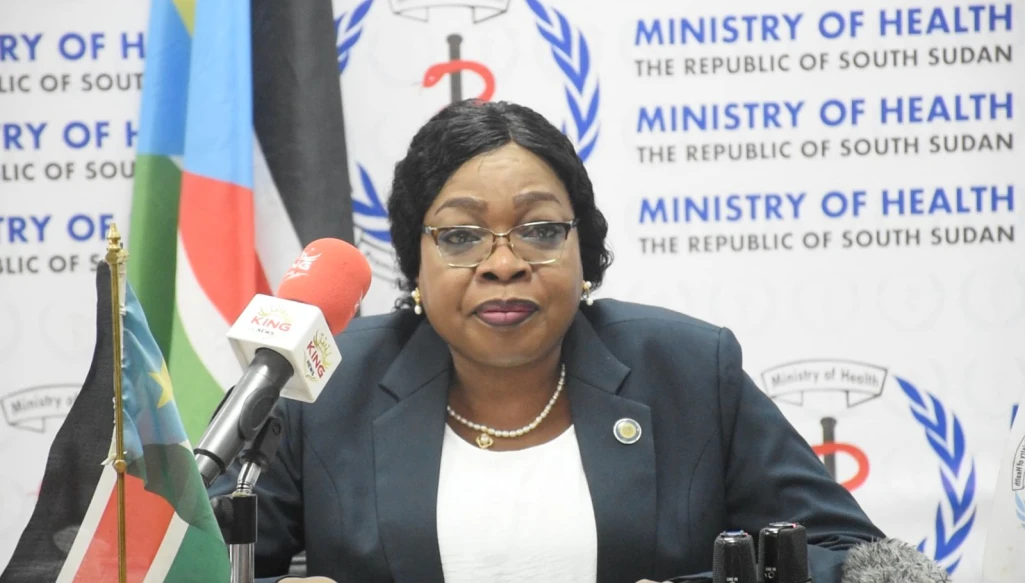
The Minister of Health has called for an increase in government funding as donor support for the country’s health sector is being sharply reduced, leaving 102 health facilities without project assistance.
Minister Sarah Cleto said the Ministry of Health is
currently receiving only 1.3% of the national budget, while roughly 85% of the
sector’s funding is coming from donors.
“Our budget out of the total budget of the country is 1.3%,
which is very small. We hope to raise that. And we hope that it will be raised
from the 1.3%, even if raised to 5% or 7% that we will be able to ensure that
services reach a level that is very decent to our population,” Cleto said,
adding that the increase would help sustain essential services at more than 100
health facilities losing donor support.
Cleto said donor withdrawals have significantly affected the
Health Sector Transformation Project (HSTP), cutting its original $400 million
budget by about half after the United States and Sweden pulled their support.
Dr. Harriet Akello, Director General for International Health and Coordination, said the 102 facilities losing donor support for low functionality, security issues, or proximity to other supported facilities will remain operational, with the ministry working with partners and the government to find alternative funding.
“We are still continuing to engage with other partners and
the government, to see other funding mechanisms that can support us in running
the health facilities. But those health facilities are open, and they will be
providing services,” Akello stated.
Benjamin Malek, Chairperson of the Specialized Committee for
Health and Population in the National Legislature, echoed the call for more
government financing.
“Our budget is still at 1.3%, and with these cuts, we should
consider increasing local financing. Donors, as you can see, have their own
limitations,” Malek said.
Officials said HSTP adjustments aim to maintain service delivery, but emphasized that boosting government funding is critical to strengthen the national health system and ensure equitable access to care.