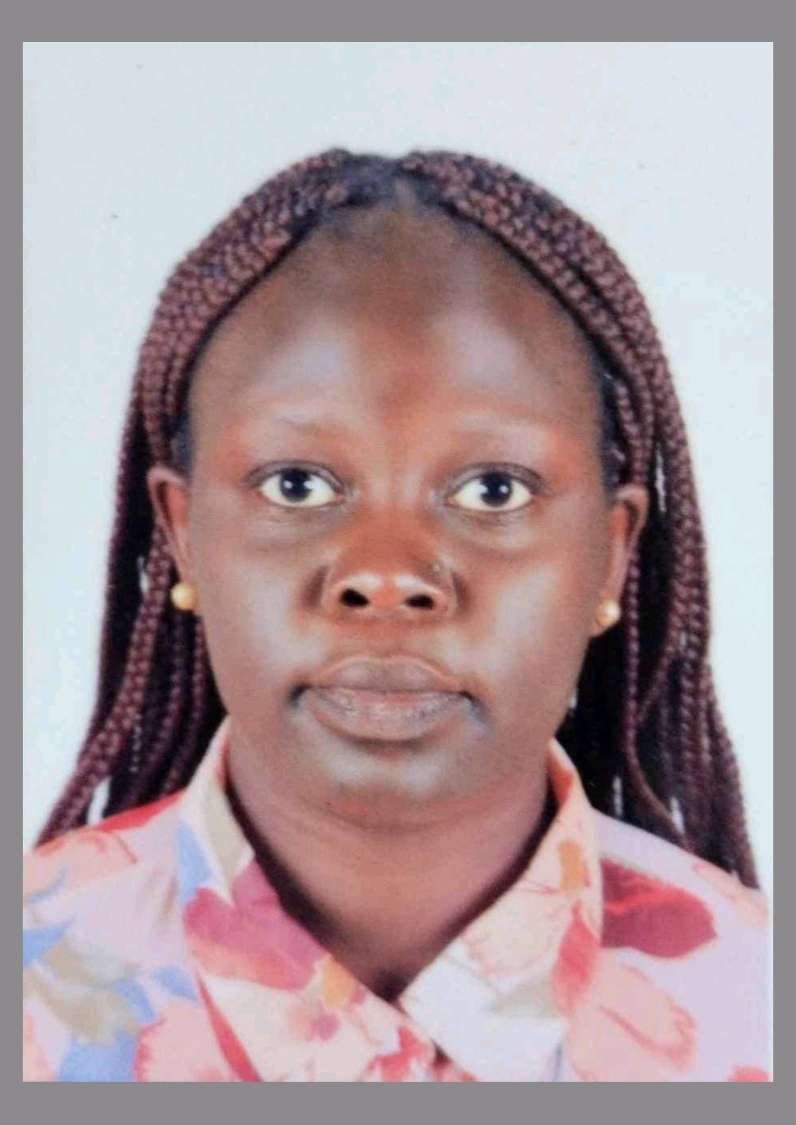
-full.webp)
After completing her South Sudan Certificate of Secondary Education
(SSCSE) in December 2024, Martha Nyanayul Deng stepped into a role rarely taken by women in her
country working as a bus conductress for Bebeto Coach Services.
Martha began her job on February 22, 2025. Her assignments
vary depending on the day, covering long-distance trips between Juba and
Kampala, as well as routes to Nairobi and Rwanda.
“I was inspired by my aunt,” Martha tells The Radio
Community. “She always said there’s no limit to how a woman can hustle. Just
because we’re women doesn’t mean we can’t do what men do. Look at female
pilots, what people used to think was a man’s job is now done by women too.”
According to Martha, many people still believe being a bus
conductor is a man’s job. But she’s determined to challenge that perception.
“I want to prove them wrong,” she says proudly. “There’s no
job labeled ‘for men’ or ‘for women.’ I love what I do, and I’m proud of it.”
She encourages other women not to shy away from
opportunities just because of outdated gender norms.
“A job is a job as long as it’s honest. As women, we
shouldn't sell ourselves short or rely on men to survive,” she says. “I'm not
going to sit and wait for someone to feed me when I can work for it.”
Martha also addresses common misconceptions about
conductors.
“People think conductors are uneducated, that we can’t speak
English, or that we’re rude. That stereotype needs to end,” she asserts.
Her love for travel makes her job even more enjoyable. “I
love movement, I love cars, I just love the road,” she says. “This job has
given me the chance to visit places I never thought I’d go, like Kenya and
Rwanda.”
“Don’t wait for your husband or any man to provide
everything. You, too, should contribute to your household. Life isn’t about
depending on others, it’s about standing on your own,” Martha advised women and
young girls.
She credits a young South Sudanese female engineer, whose
name she doesn’t recall, as another major source of inspiration.
“She was trending on social media, carrying blocks, mixing
cement, doing construction. She inspired me a lot,” Martha shares.
For her, it’s all about breaking barriers. “Don’t let any
man limit your potential. Do what you’re capable of and be proud of it.”
Martha believes idleness is dangerous, especially for young
people today.
“A paying job, no matter how small, is better than sitting
idle. When you’re idle, you start overthinking or fantasizing about a lifestyle
you can’t afford. Many young people today don’t want to work, they want
shortcuts,” she says.
While she enjoys her job, it’s not without challenges. One
of the biggest, she says, is dealing with difficult passengers especially
non-East Africans unfamiliar with border procedures.
“Some don’t listen when I tell them they’ll need visas or
travel documents,” she explains. “Then at the border, they get stuck and call
for help. But when you ask them for the required visa fees, they insult you,
call you a thief or worse.”
She also encounters daily frustrations, like demanding or
impatient customers.
“Some get angry over simple things like not getting the
Wi-Fi password. They will say, ‘You are not even a good company,’” she says
with a laugh.
Despite these hurdles, Martha remains composed and
professional.
Beyond her current work, Martha dreams of one day becoming a
medical professional.
“We’re building for the future,” she says. “With time, I hope to study medicine and serve my country in the healthcare field.”