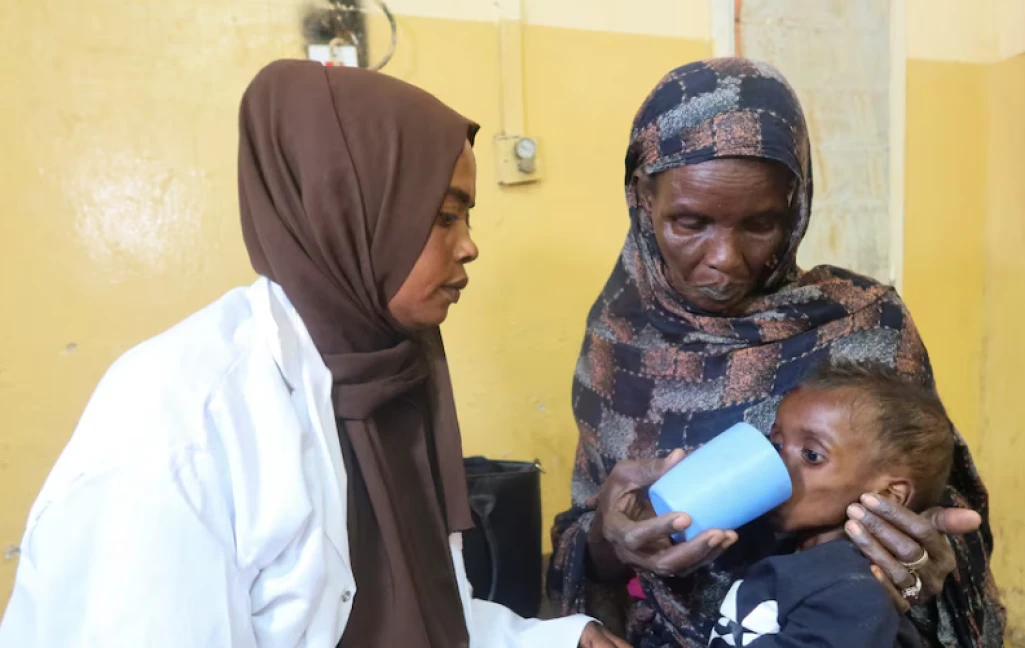
In a
nutrition ward at a hospital in Sudan's war-stricken capital, gaunt mothers lie
next to even thinner toddlers with wide, sunken eyes.
The patients
at Alban Jadeed Hospital are in urgent need of help after nearly two years of
battles that have trapped residents and cut off supplies, but doctors have to
ration the therapeutic milk and other products used to treat them.
Keep up with
the latest medical breakthroughs and healthcare trends with the Reuters Health
Rounds newsletter. Sign up here.
The
war that erupted in April 2023 from a power struggle between Sudan's
army and the paramilitary Rapid Support Forces (RSF) has created what the United
Nations calls the world's largest and most devastating humanitarian
crisis.
About half of
Sudan's population of 50 million now suffer some degree of acute hunger, and
famine has taken hold in at least five
areas, including several parts of North Darfur State in western Sudan.
The real
situation could be worse, since fighting has prevented proper data collection
in many areas, medics and aid staff say.
In Sudan's
greater capital, where the cities of Khartoum, Omdurman and Bahri are divided
by the Nile, the warring factions have prevented deliveries of aid and
commercial supplies, pushing the prices of goods beyond most people's reach.
Alban Jadeed
Hospital, in Bahri's Sharg Elnil district, received more than 14,000 children
under five years old suffering from severe acute malnutrition last year, and
another 12,000 with a more mild form, said Azza Babiker, head of the
therapeutic nutrition department.
Only 600 of
the children tested were a normal weight, she said.
The supply of
therapeutic formula milk via U.N. children's agency UNICEF and medical aid
agency MSF is insufficient, Babiker said, as RSF soldiers twice stole the
supplies.
Both sides
deny impeding aid deliveries.
The sharp
reduction of USAID
funding is expected to make things worse, hitting the budgets of aid
agencies that provide crucial nutritional supplies as well as community
kitchens relied upon by many, aid workers say.
The army
recently captured Sharg
Elnil from the RSF, as part of recent
gains it has made across the capital.
Fruit and
vegetables have become extremely scarce. "Aside from the difficulty of
getting these products in, not all families can afford to buy them,"
Babiker said.
Many mothers
are unable to produce milk, often due to trauma resulting from RSF attacks, or
their own malnutrition, said Raneen Adel, a doctor at Alban Jadeed.
"There
are cases who come in dehydrated ... because for example the RSF entered the
house and the mother was frightened so she stopped producing breast milk, or
she was beaten," she said.
The RSF did
not immediately respond to a request for comment.
A lack of
nutrition and sanitation has led to cases of blood poisoning and other
illnesses, but the hospital has also run out of antibiotics.
"We had
to tell the patients' companions to get (the drugs) from outside, but they
can't afford to buy them," Adel said.