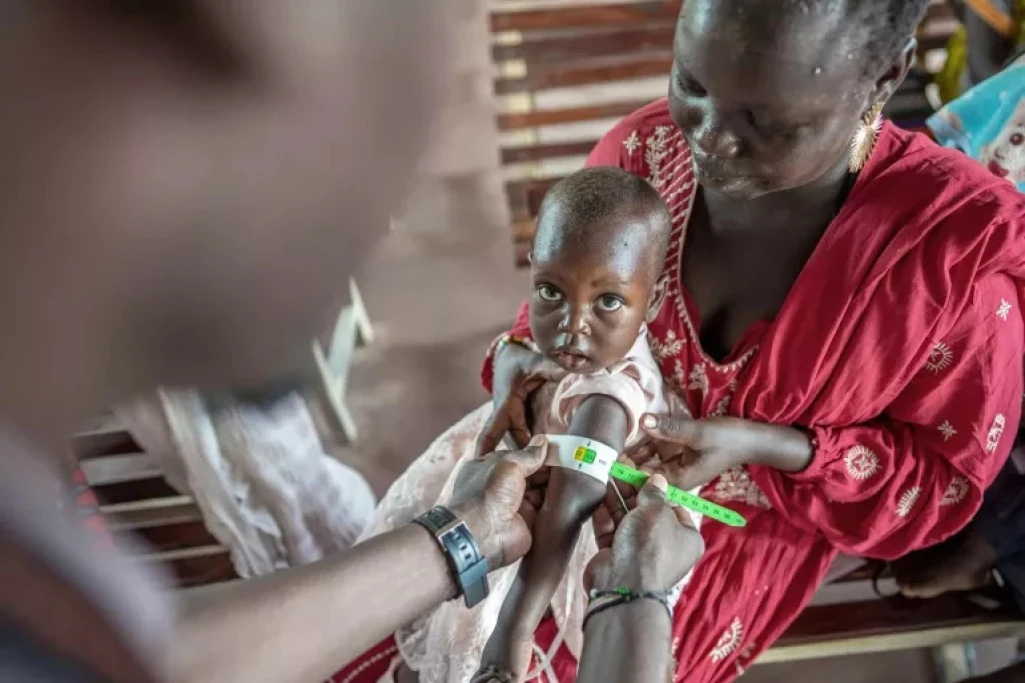
The malnutrition crisis in South Sudan is worsening, putting more children and mothers at risk as conflict, displacement, and disease continue to impact communities across the country.
Recent humanitarian assessments indicate that the number of children suffering from acute malnutrition has risen to 2.3 million, up from 2.1 million earlier this year. The situation is particularly dire in Upper Nile and Unity states, where conflict-affected areas are also battling a cholera outbreak.
“These latest projections place an additional 200,000 young children at high risk of malnutrition,” said Noala Skinner, UNICEF’s Country Representative in South Sudan. “The cholera outbreak has compounded an already challenging situation, putting young lives in a precarious fight for survival.”
In some counties, health facilities have been forced to shut down due to insecurity, leaving many children and mothers without access to nutrition services. Aid agencies warn that limited access to healthcare and nutrition treatment is reducing the chances for early intervention for malnourished children.
The ongoing violence in Upper Nile, which has displaced thousands of families, has also disrupted farming and food supplies, worsening food shortages for vulnerable communities. The lean season—when food stocks are already low—has made the situation even more critical.
Mary-Ellen McGroarty, Country Director for the World Food Programme (WFP) in South Sudan, emphasized the urgent need for peace and immediate humanitarian access. “Conflict doesn’t just destroy homes and livelihoods; it cuts off access to markets, drives food prices up, and leaves children hungry,” she said.
Humanitarian agencies are calling for urgent action to scale up nutrition services and ensure safe access to deliver aid to affected families before the situation deteriorates further.