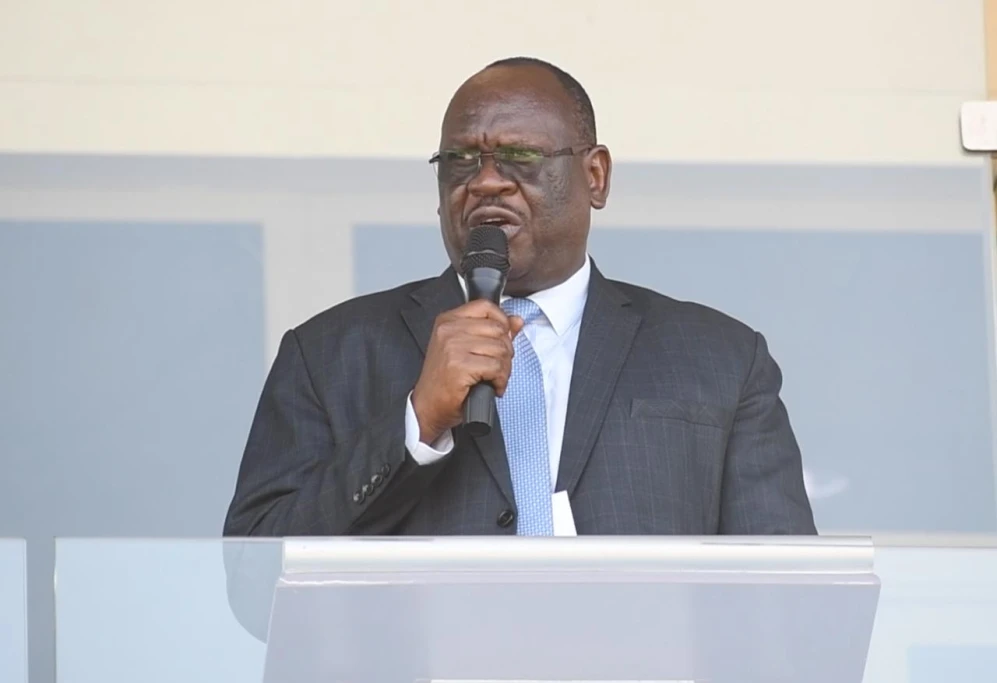
The Minister of Labour said the government has expanded labour reforms over the past two years, focusing on public sector recruitment, youth skills development, and private sector job creation through new industrial investments.
“In the last 24 months, public service recruitment resumed
after a five-year freeze,” Anthony Lino Makana stated.
“We recruited 2,400 teachers, 1,100 health workers, and 800
agriculture extension officers in 2025.”
Despite civil servants going months without salaries, Lino
said there have been improvements in salary consistency across the public
sector.
“Salaries are now paid on time for 10 consecutive months,”
Lino noted.
With approximately 72 percent of South Sudan’s population
aged between 18 and 35, youth unemployment remains a major concern.
Lino acknowledged continued unemployment pressures,
especially among graduates, but stressed the government’s broader economic
direction.
He disclosed that the ministry with its partners trained
young people in various skills.
“We have trained 12,000 youths in plumbing, solar
installation, welding, ICT, nursing, and 68% are now employed or self-employed,”
he stated.
He added that the government is implementing a two-to-one
policy, requiring companies to train two South Sudanese nationals for every
foreign technician granted a work permit.
“The results, we have 4,200 young people who move from being
jobless to being skilled in one year. Private sector jobs. With the returning
of peace, 47 new factories and companies registered in 2025, creating 9,000
direct jobs in agriculture, construction, and services,” he explained.
The minister made the remarks during the commemoration of
International Labour Day held on Friday at Juba National Stadium in Juba.
International Labour Day, observed annually on May 1, recognizes
the contributions of workers across all sectors.
It serves as a platform for promoting fair wages, safe working conditions, and gender equality in the workplace.