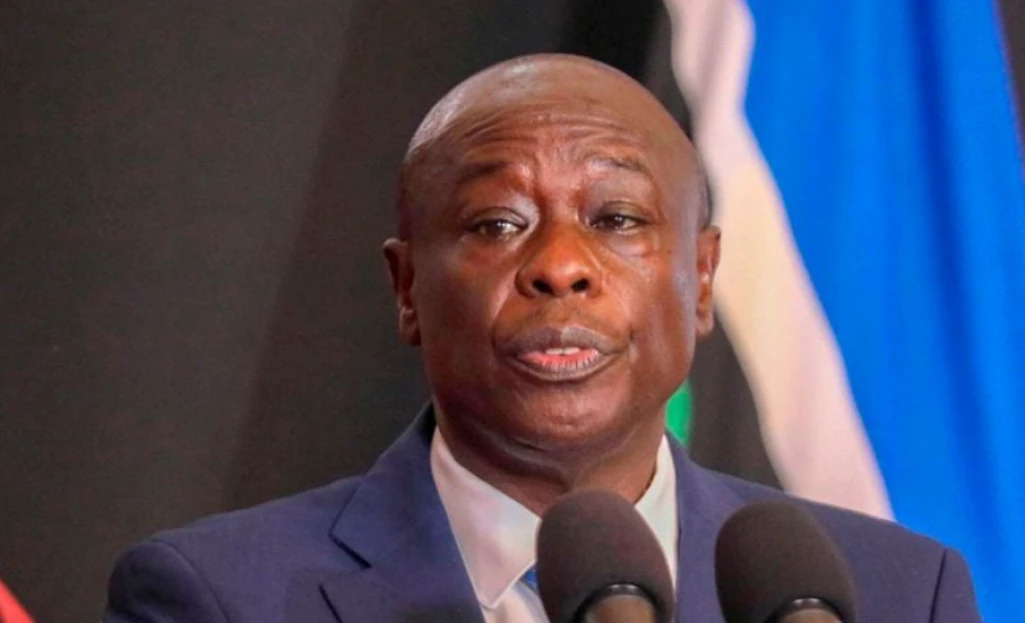
In a historic
move, Deputy President Rigathi Gachagua became the first DP to be impeached
last night, marking a significant moment in Kenya’s political landscape. An
overwhelming majority of 281 members of Parliament voted in favour of the
motion to remove him, while only 44 opposed it. ‑
This decisive
vote met the two-thirds threshold required by law, prompting National Assembly
Speaker Moses Wetang’ula to announce that the resolution would be transmitted
to the Senate, where a trial would ensue.
Gachagua is
expected to dash to court to try and block the Senate from deciding on the
matter. ‑
The
atmosphere in the National Assembly was charged as Gachagua took the floor to
defend himself against the impeachment motion, which he argued was not just an
attack on him but on his boss, President William Ruto.
In a
calculated move, Gachagua played video clips during his defence, attempting to
implicate Ruto in the very crimes he was accused of. ‑
The videos
featured Ruto criticising various security agencies, including the Directorate
of Criminal Investigation, and lamenting the inefficiency of state officers.
“I learnt
from my boss that public officers must be called to order when they fall short
of expectation,” Gachagua said, emphasising that his words were merely a
reflection of Ruto’s previous sentiments.
He questioned
the fairness of the allegations against him, pointing out that Ruto never faced
impeachment for his criticisms of the Inspector General or the DCI. Gachagua
defended his actions by reminding MPs of Ruto’s stance against forced
evictions.
“The Deputy
President is being accused of undermining his boss by doing what his boss said
we should never do—brutally evict the people of Kenya,” he argued, asserting
that his intentions had been misrepresented.
However, his
defence was met with scepticism from the opposition. Kibwezi East MP Mwengi
Mutuse, who spearheaded the impeachment motion, presented a comprehensive case
against Gachagua.
He laid out
11 allegations, supported by video evidence, that painted a picture of a Deputy
President unfit for office.
The
overwhelming sentiment among MPs was that Gachagua’s abrasive rhetoric had
fostered division and that he had repeatedly placed personal interests above
public service.
Speaker
Wetang’ula set a critical tone, criticising Gachagua’s conduct, especially
regarding a press briefing he held before his appearance before the House.
Wetang’ula
described the DP’s actions as “abhorrent” and called for greater decorum,
particularly concerning issues currently before the Assembly. Gachagua’s
defence, which he characterised as a political witchhunt, was further
undermined by the testimonies of various MPs.
Minority Whip
Millie Odhiambo pointed out that Gachagua’s public statements had left little
room for sympathy.
“If the
Deputy President had been quiet, he would have carried many people in this
House, but he did not tame his tongue,” she said.
The
allegations against Gachagua included accusations of coercing the sale of his
deceased brother’s properties and transferring his companies to his sons, who
allegedly secured a Sh600 million loan.
Critics
questioned the legitimacy of such transactions involving individuals in their
early twenties and called for accountability.
Deputy
Majority Leader Owen Baya echoed these sentiments, drawing parallels between
Gachagua’s actions and past political scandals. He recalled the controversial
removal of former Deputy Chief Justice Nancy Baraza, suggesting that Gachagua’s
alleged improprieties warranted similar consequences.
The debate
took a personal turn when Nyandarua Woman Representative Faith Gitau condemned
Gachagua’s treatment of women, asserting that he had lowered the dignity of his
office through derogatory comments toward female leaders.
This
sentiment resonated with several MPs, who expressed disappointment in the
Deputy President’s behaviour. As the motion progressed, several MPs emphasised
that the decision to impeach Gachagua was not a reflection of regional
sentiments but rather a matter of accountability.
Ugenya MP
David Ochieng’ clarified, “We are not impeaching Mt Kenya; we are not
impeaching a Kikuyu…he has alienated Mt Kenya from the rest of the country.”
The session
was punctuated by lighter moments when Tetu MP Geoff rey Wandeto attempted to
withdraw his support for the impeachment motion, only to be rebuffed by the
Speaker. Wetang’ula clarified, “Once you append your signature to a Special
Motion, you have crossed the Rubicon and you cannot withdraw that signature.”
With the
National Assembly’s verdict now passed, Speaker Wetang’ula is set to transmit
the resolution to the Senate within two days.
Senate
Speaker Amason Kingi will then have seven days to convene the House, where
senators will decide whether to conduct the trial through a committee or in
plenary.
If a
committee is chosen, it will have 10 days to report back to the Senate, where
both parties will present their cases before a final vote on Gachagua’s
impeachment.
The outcome
of this trial holds significant implications for Kenya’s political future. If
Gachagua is impeached, he will cease to hold office, marking a pivotal moment
in the administration of President Ruto.
As the nation
awaits the Senate’s decision, the political ramifications of this historic
impeachment will continue to unfold, reshaping the contours of power and
accountability in Kenya.