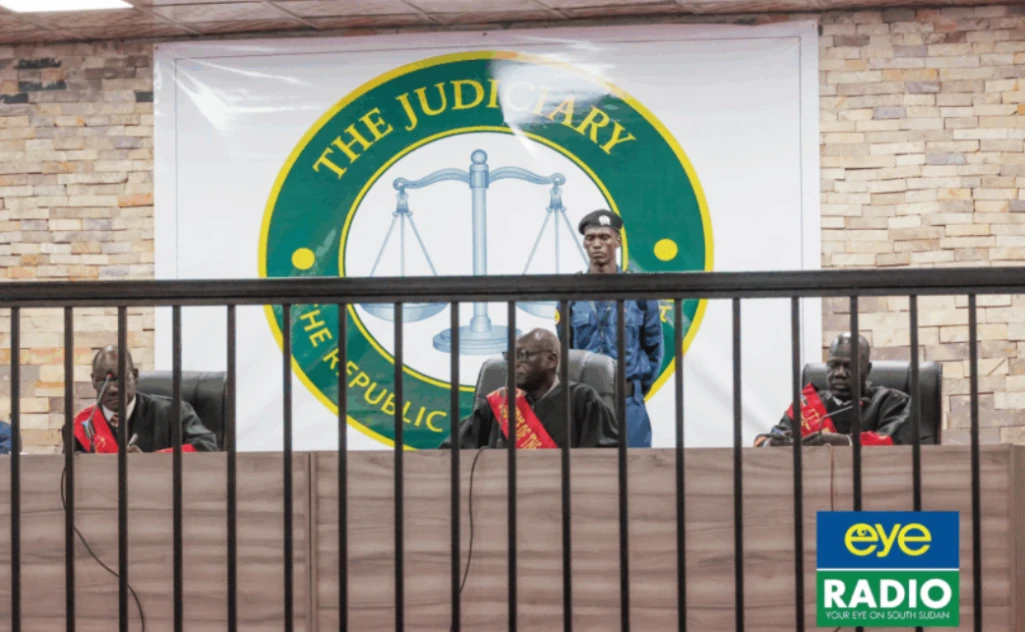
Judges of the Special Court on Friday raised concerns over the handling and integrity of digital forensic evidence presented in the trial of suspended First Vice President Dr. Riek Machar and seven co-accused.
The court concluded cross-examination of the prosecution’s
final witness, South African digital forensic expert Calvin Rafadi, who
testified on the analysis of electronic devices allegedly linked to the
accused.
Judge Stephen Binjigwa, during the 71st session questioned why the forensic report
had not been formally authenticated when it was submitted to an investigation
committee in Juba in August 2025, and whether proper procedures for submitting
foreign expert evidence had been followed.
Rafadi told the court he was aware that authentication was
required but said he needed to verify the specific procedures applicable in
South Sudan.
Presiding judge Dr. James Alala also raised concerns over
how access to the devices was obtained and whether the evidence could have been
compromised. Rafadi said passwords were found written on the devices and kept
in sealed evidence bags, and insisted he did not tamper with the items.
He told the court the devices had not been altered and said
he only examined items physically presented to him under chain-of-custody
procedures.
The judges further questioned the scope of the forensic
analysis, noting that only devices belonging to the accused were examined.
Rafadi said he found no direct communications ordering
attacks in Nasir but cited evidence of real-time information sharing through
WhatsApp. He added that his analysis followed professional standards provided
proper chain-of-custody procedures were maintained.
During earlier testimony in a related session, Rafadi also
told the court that suspended First Vice President Riek Machar did not provide
passwords for his electronic devices, complicating efforts to access data. He
said investigators were unable to unlock the devices and that technical
limitations prevented extraction of some information.
The defence requested a one-week adjournment to prepare the
accused for questioning and asked that future proceedings be broadcast live on
the state broadcaster SSBC. The prosecution opposed both requests, warning that
live coverage could pose security risks and influence public opinion.
The court adjourned proceedings until Monday, April 27, when
judges are expected to rule on the defence application.
Machar and his seven co-accused face charges including
murder, conspiracy, terrorism, treason, destruction of public property and
crimes against humanity.
Machar remains under house arrest, while the co-accused are
detained in National Security Service facilities in Juba.
Prosecutors allege that forces linked to the SPLM-IO and the
White Army killed 257 South Sudan People’s Defence Forces soldiers, including a
commander, and destroyed or seized military equipment worth about $58 million
during an attack on a military garrison in Nasir in March 2025.