The family of late liberation leader Joseph Lagu is establishing a university in his honour, with plans to admit its first students in January or February 2027 as part of efforts to preserve his legacy through education.
Josephine Joseph Lagu, his daughter, said the family had
spent six months working on the Joseph Lagu University of Science and
Technology and had planned to launch it on November 21, her father's birthday.
But Lagu died on October 27, just weeks before the planned
launch.
"Had events not overtaken us, the university was going
to be launched on that birthday. Next was going to be in a few days' time on
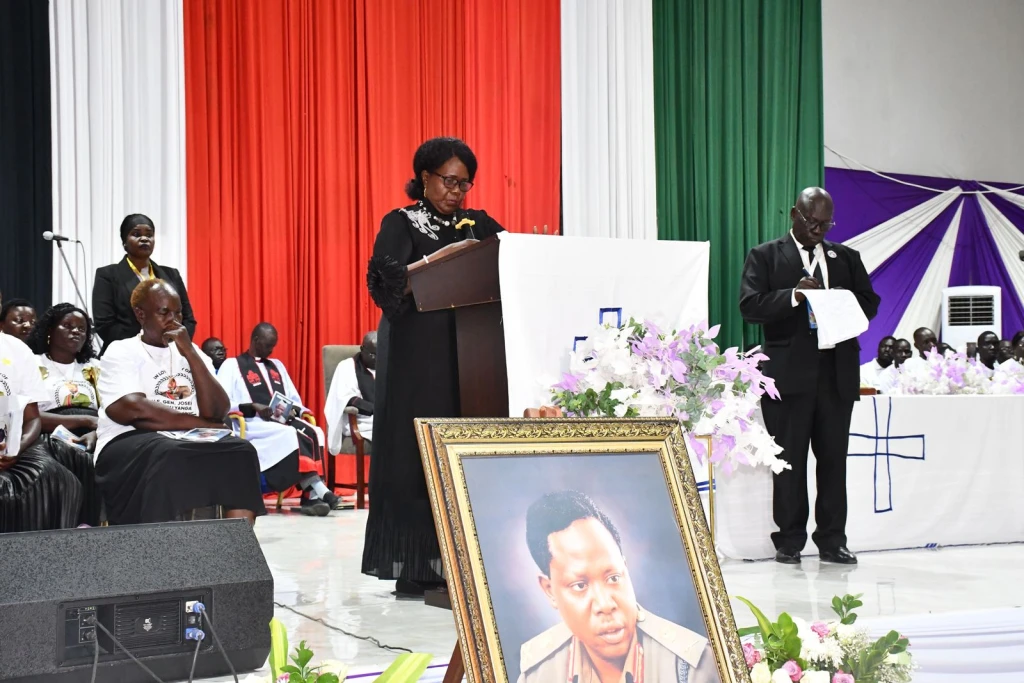
the 21st of November, 2026," Josephine said on Tuesday during final
funeral prayers at the Parliament building in Juba.
She said the family had worked closely with the Ministry of
Higher Education and secured most of the documents required for registration.
Approval of curricula for the university's different faculties remains
outstanding.
The university will have its headquarters at the Amara Lagu
building in Juba, with a branch planned for Nimule, her father's home area.
The family is seeking President Salva Kiir's support to
facilitate the institution's establishment as a lasting memorial to the late
general.
"The family is therefore requesting His Excellency, the
President, to support and facilitate establishment of this university as an
enduring memorial to our father," Josephine said.
She also appealed to individuals, international
organisations and other institutions to support the project financially or
through in-kind contributions.
Josephine acknowledged the challenge of carrying forward her
father's legacy but said the family was committed to doing so.
"It's not an easy thing to follow that footstep. But as
a family, we will try to do whatever we can to continue his legacy," she
said.
Lagu was a central figure in southern Sudan's liberation
struggle. He led the Anyanya forces and played a key role in negotiations that
produced the 1972 Addis Ababa Agreement, which ended the first Sudanese civil
war and granted southern Sudan regional self-government within a united Sudan.
He later served as president of the autonomous Southern Region and Sudan's second vice-president. He died in Juba on October 27, aged 94.