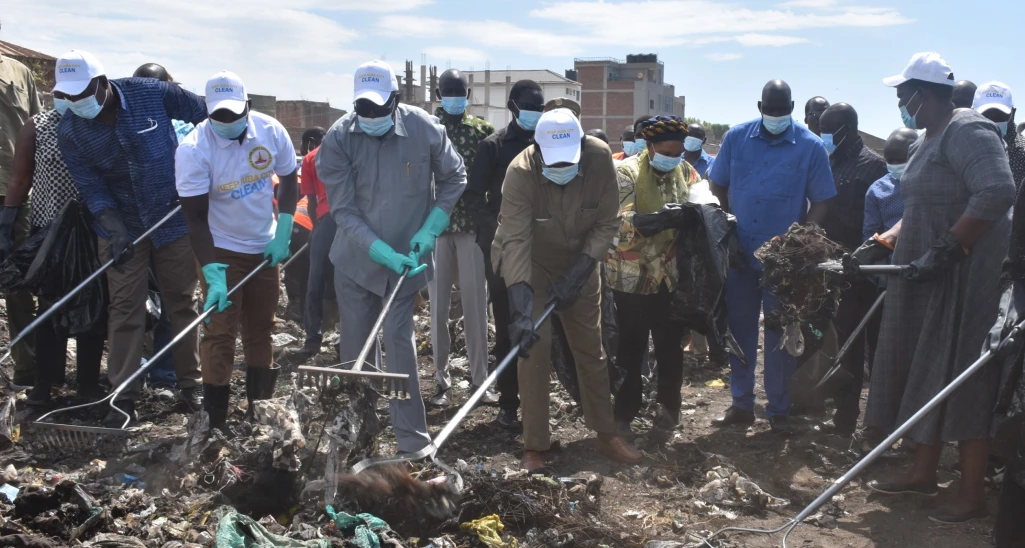
Health officials are urging the public and local authorities to maintain a clean environment as part of South Sudan’s fight against malaria ahead of the rainy season.
Dr. Apal Toby Maduot, Director of the National Malaria
Control Program at the Ministry of Health, stressed that environmental
management is key to reducing mosquito breeding.
“We want to make sure that the vector control also is being
looked into; the environment must be kept clean, which is the role of others,
including the city council,” Toby said on Monday.
“So, I would like to just cement that Ministry of Health is
using the one health approach, ensuring that everybody participates and ensures
that using the nets is also catered for.”
Toby made the remarks during Monday’s handover of 763,000
mosquito nets in Juba, part of a total of 9.5 million nets slated for
distribution across the country to protect families against malaria.
Ms. Yar Manyuon, Director General for Preventive Health and
Emergency Preparedness at the Ministry of Health, emphasized the need for
public awareness.
“We know in our country most people self-treat. Whenever you
get sick, go get tested so that we can get the proper actual burden of malaria
in South Sudan,” she stated.
The Ministry of Health is promoting a “one-health” approach,
encouraging participation from households, local authorities, and health
agencies to combat malaria effectively.
Officials say the rainy season is a critical time to reduce mosquito breeding sites through proper sanitation and hygiene.
Malaria remains a leading cause of death in South Sudan, claiming 18 lives every day.