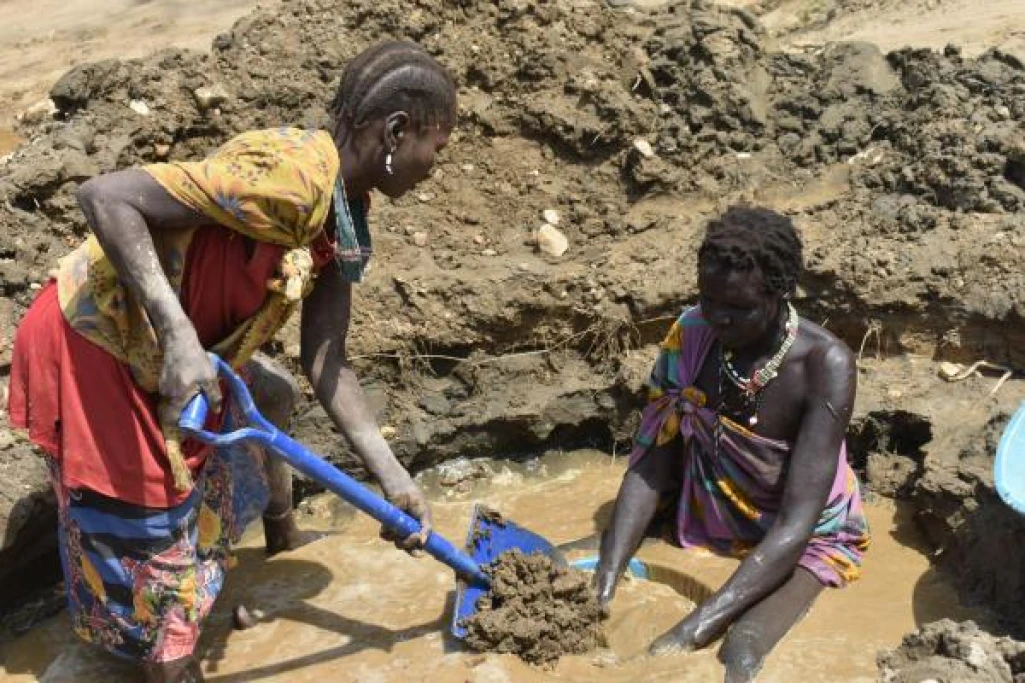
Women in Kapoeta look for gold deposits | Credit | Courtesy
The Governor of Eastern Equatoria State, Louis Lobong Lojore, has ordered the immediate closure of the Lopua gold mining site in Budi County following the deaths of 26 people in recent violent incidents.
Lobong visited Ngauro Payam over the weekend to assess the
security situation following attacks by armed groups in December 2025.
Authorities said the closure aims to restore order and ensure that future
mining activities are properly regulated.
Budi County Commissioner Julious Amin Ben said the violence
at the mining site has seriously affected local communities.
“Lopua is a major mining area which has more than 62 tribes.
Everybody comes from far, going direct to Lopua without noticing the
government. Now, when the incident happened, it really affected the locals,”
Ben said.
“The governor officially closed it until further notice.
When you go to Lopua, they use generators. The locals can do small-scale
mining, but it has to be government-controlled,” he added.
Ben said locals are allowed to mine in the area during the
day, but night mining is prohibited as it poses safety risks. Miners must
return to the Ngauro center at night.
Mining in Eastern Equatoria is mostly informal and
artisanal, with small-scale operations carried out by local communities.
Authorities have repeatedly said there are no large-scale licensed commercial
mines currently operating.
Locals primarily use traditional techniques, such as panning
for gold from seasonal streams. Some estimates suggest around 60,000 miners
work at roughly 80 locations, including Nanaknak, Ngauro (Didinga Hills),
Napotpot, and Namurnyang. The work provides families with resources for basic
needs.
A 2020 report by the Enough Project said the gold mining sector in the Kapoeta area has been criminalized. Despite a legal framework, South Sudan’s gold sector remains largely ungoverned and poorly regulated.