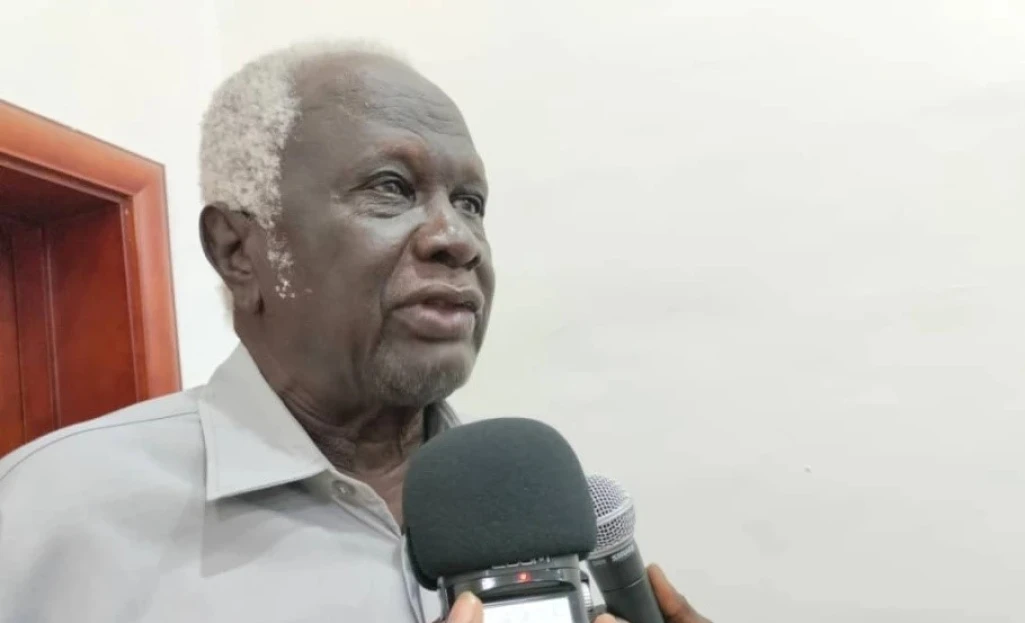
The
chairperson of the National Elections Commission (NEC) has stressed the
critical role of peace in ensuring the success of the upcoming 2026 elections.
Recent
fighting between the White Army and SSPDF in Nassir and Ulang counties of Upper
Nile State has jeopardized the 2018 revitalized peace agreement, which ended a
five-year civil war.
The situation
remains tense, with fears of further violence if the government and the White
Army fail to resolve their differences through dialogue.
On Friday,
President Salva Kiir called for calm and assured the country would not return
to war.
“I personally
am concerned about the culture of peace. We need to promote the culture of
peace from the top to the bottom. Otherwise, we will not be able to do anything
better,” said Prof. Abednego Akok in an interview with this publication.
He emphasized
that the leaders who signed the 2018 revitalized peace agreement must take the
lead in promoting peace, which is essential for the country’s stability.
Key elements
of the 2018 peace deal, such as a new constitution, census, and army
reunification, remain unimplemented.
According to
him, the success of the election process is contingent on the creation of a
peaceful environment where people can coexist and tolerate each other.
“Let us build
peace among ourselves. If we build peace, we should at least coexist, so that
we tolerate each other. And then we plan to go for elections,” Prof. Akok
echoed.
Despite the
challenges, he expressed optimism that elections will take place.
“I am optimistic that elections will take
place because, you know, power-sharing will help solve crises. After solving
them, people will sit down, process, and give the chance to the citizens,” he
explained.
While NEC is
working on finalizing the election timeline, it faces a major challenge in
securing adequate funding for the upcoming elections.
Although the
election budget, initially estimated at $253 million, has been approved by both
the Council of Ministers and the Assembly, NEC officials have called for an
increase due to the ongoing depreciation of the national currency.
“We need
more. I cannot determine now the new budget because it should be assessed by
the experts. That request should be supported without delay. In other words, we
need availability of resources so that we have embarked on building offices in
states,” the chairperson added.
Originally
set for 2024, the country’s first elections have been postponed to 2026 due to
insufficient preparedness, with the transitional period extended by two years.
The National
Election Act requires the election calendar to be declared six months before
the elections, while the 2018 peace agreement mandates that elections must be
held within two months of the end of the transitional period.