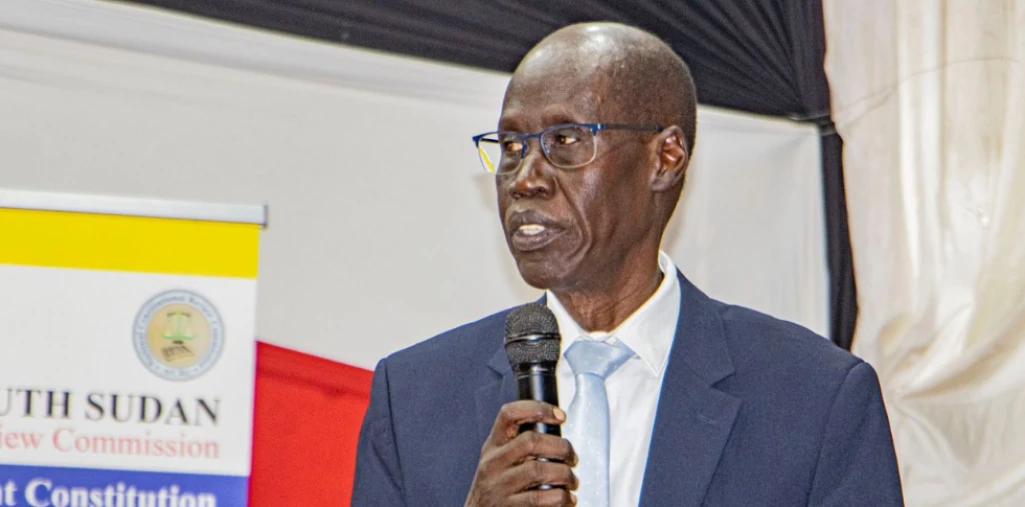
The former
vice chancellor of the University of Juba has raised concern about the
country's authorities' lack of political commitment to drafting the new
constitution.
Prof. John
Akec stated the fragile state of the country and urged leaders to prioritize
peace, civic engagement, and responsible governance in the process.
“Peace is
very important. Maintaining peace in the country is very important. Without
peace, nothing, even this work, will go all in vain,” Prof. Akec said at the
launch of the civic education and public consultations campaign on Thursday in
Juba.
“The
constitution will be the constitution the government will want, how we elect
the people who will rule us and serve us. It will also determine the kind of
government we want to have in terms of federalism— what kind of federalism we
are going to have. It will give us a voice.”
While civic
education was scheduled to start in December 2024, it has faced delays.
Prof. Akec
emphasized that civic education is crucial for the success of the
constitutional process, ensuring citizens understand it and that the
constitution reflects their needs and aspirations.
He pointed
out the significant challenges facing South Sudan, from poor governance to
inadequate resources.
“There is a
lot of taxable income. We are unable to get it because of institutional
weakness and because of other things that undermine the taxpayers' trust in
terms of their commitment to comply or not. We live between either peace or no
peace,” he noted.
He urged the
country's leaders to exercise wisdom and foresight, drawing a comparison
between leadership and driving.
"A good
driver would commit a few accidents. But if you continue to bomb yourself left
and right, then you are not a good driver. And that would be a challenge for
our leaders, to make sure that our backs are not broken, our bones are not
broken, and our blood is not spilled,” he added.
South Sudan's
efforts to create a permanent constitution have been delayed since the 2013
civil war, despite the formation of the National Constitutional Review
Commission (NCRC) in 2012.
Last year,
parties that did not sign the 2018 peace agreement suggested drafting the
constitution abroad, but citizens opposed this, preferring it to be done
domestically for broader participation.
The
constitution-making process, crucial for lasting peace and governance, has seen
some progress, including facility upgrades and staff training with support from
international partners.
However, the
commission had been unable to begin civic education and public consultations
due to a lack of funding, receiving only $800,000 of the $43 million needed.
South Sudan's
elections, originally set for December 2024, have been postponed to December
2026 to allow more time to complete the peace agreement's tasks, including the
constitution-making process.