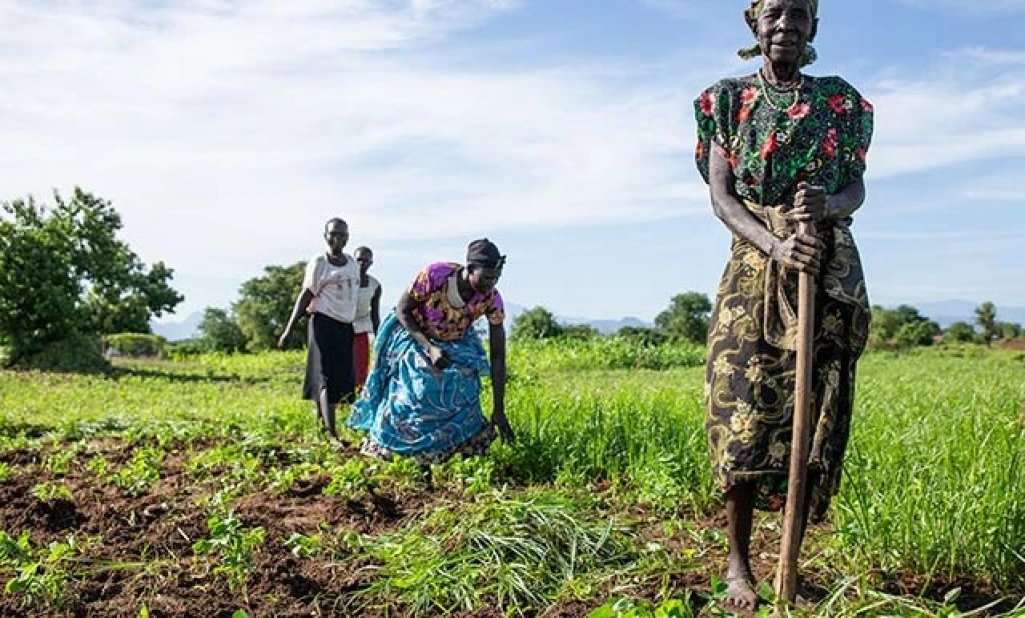
Local Farmers in Aweil, South Sudan during farming season.
Farmers
in Bor, Jonglei State, are increasingly grappling with the devastating effects
of climate change. Once renowned for its fertile floodplains and predictable
seasons, the region now faces erratic rainfall, destructive floods, and
prolonged dry spells putting the future of agriculture at risk.
Traditional
farming under pressure
Mark
Lual Mayen, a 32-year-old farmer from Anyidi Payam, recalls how his entire
sorghum farm was wiped out by an unexpected flood.
“The
rains no longer come when we expect. The flood destroyed my entire sorghum
field. We planted late because of delayed rains, and now it's flooded,” he
said.
Mark's
experience mirrors that of hundreds of smallholder farmers across Bor who
depend solely on rain-fed agriculture. Without irrigation systems or reliable
weather forecasts, farming has become an increasingly uncertain endeavor.
From
floods to droughts
In
recent years, Jonglei has witnessed a harsh cycle of extreme weather. The
floods of 2020 and 2021 displaced thousands, while 2023 saw parched land and
dried-up water sources replacing once-flowing rivers and streams.
John
Matiop Ayuen, another farmer, said the unpredictability is making it difficult
to plan or invest in farming.
“Floods
affected both low and high grounds. Some of us had up to 10 paddocks because of
last year’s good harvest, so we increased our efforts. But now, without weather
forecasts, everything’s lost.”
John
is urging the Ministry of Agriculture and its partners to provide consistent
climate education and establish early warning systems to help farmers prepare
in advance.
Outdated
methods no longer work
Maker
Mabior Nihal, a young farmer from Makol Chuei Boma, says that relying on
traditional weather knowledge is no longer effective.
“We
farm based on what we think will happen. Sometimes the rain comes before
planting, sometimes right after. We need an early warning system—even if it’s
just a radio message or community alert.”
The
push for climate-smart agriculture
Experts
argue that climate-smart agriculture offers a way forward. These practices
include water harvesting, raised-bed farming, early planting, and the use of
drought-resistant seeds.
Deng
Garang Kuei, Country Director of Combat Hunger South Sudan (CHSS), highlighted
efforts to equip farmers with the tools and knowledge to adapt.
“We’ve
trained some farmer groups to manage floods and droughts. Early planting is
key. If crops are a month old when floods come, they’ll survive. Blocking water
from entering farms also helps,” Deng said.
He
added that awareness can be effectively spread through community radio, local
churches, and village leaders.
Government
response and limitations
Del
Anyieth Atem, Director of Agricultural Mechanization in Jonglei, said the
Ministry is working on a climate adaptation plan. However, challenges persist
due to limited infrastructure and funding.
“We’re
engaging partners to support small-scale irrigation, community weather
stations, and farmer training. But the crisis is larger than our current
capacity,” Del explained.
Some
of the initiatives being explored include rice farming and continued dyke
construction.
A
call for tools, not handouts
Despite
support from organizations such as FAO, NPA, CHSS, and UNOPS, many of whom have
piloted initiatives like solar-powered irrigation systems and improved seeds, only
a small fraction of farmers in Bor have benefited so far.
Local
farmers say they don’t need handouts. What they’re asking for is access to tools,
training, and timely information to adapt to the changing climate and continue
feeding their communities.
This
story was produced with support from Journalists for Human Rights under the
Tackling Mis/Disinformation Project, funded by the Government of Canada’s Peace
and Stabilization Program.