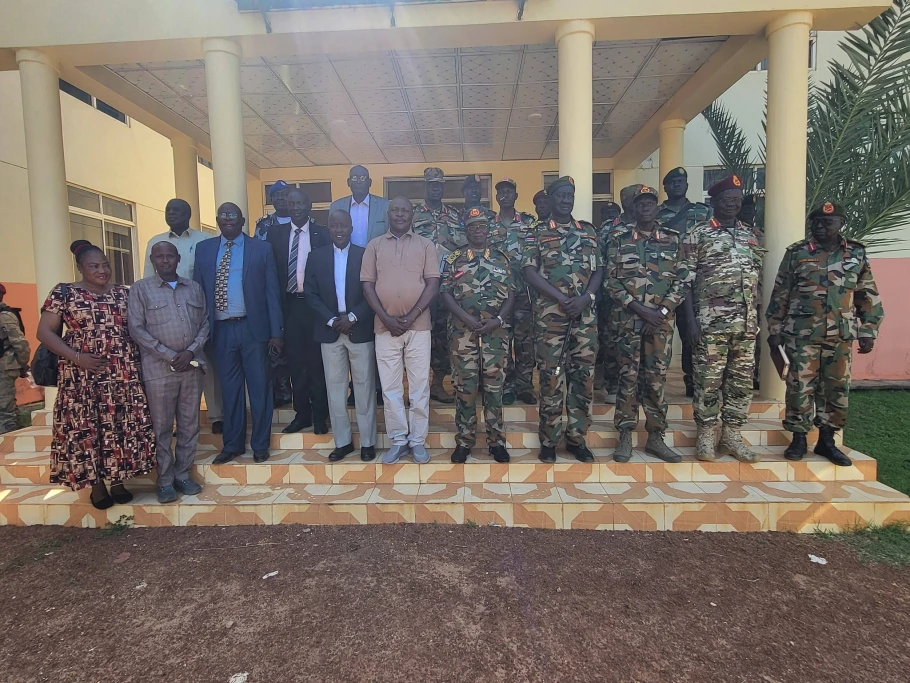
Chief of Defence Forces, Gen. Santino Deng Wol, visited Eastern Equatoria State on Saturday for consultations on the implementation of security arrangements under the Revitalized Peace Agreement, as efforts continue to advance stalled security sector reforms and force integration.
The visit comes as the military leadership engages SSPDF,
SPLA-IO and South Sudan Opposition Alliance (SSOA) forces in renewed
discussions aimed at strengthening coordination and progressing the unification
of armed groups under agreed security structures.
Earlier in May, Gen. Santino urged former opposition-aligned
forces that have abandoned revolution and pledged allegiance to the government
to remain on standby pending further directives on integration into the South
Sudan People’s Defence Forces and other organized forces.
During his visit to Eastern Equatoria, Gen. Santino said the
current consultations focus on organizing forces that have joined the
government and ensuring that those not yet assembled report to designated
cantonment and training centres for integration and restructuring under the
peace agreement.
Governor Louis Lobong Lojore briefed the CDF on the security
situation in the state, saying Eastern Equatoria remains generally calm and
stable, largely due to community policing initiatives involving local
residents.
He, however, raised concern over recurring incidents of
child abductions and cattle raids, which he said continue to affect parts of
the state.
Lobong alleged that some armed groups operate from areas
occupied by SPLA-IO forces, from where they carry out raids and abductions. He
also cited movements by elements linked to the National Salvation Front (NAS),
which he said occasionally collaborate with other armed actors in destabilizing
parts of the state.
The governor further highlighted logistical constraints
facing security forces, particularly shortages of food and other supplies
needed to sustain deployments across remote areas.
Gen. Santino said the peace process requires sustained
cooperation among all parties and emphasized that lasting stability depends on
the effective implementation of security arrangements under the Revitalized
Peace Agreement.
He also stressed the importance of local participation in maintaining peace, noting that communities remain central to addressing security challenges due to their knowledge of local dynamics