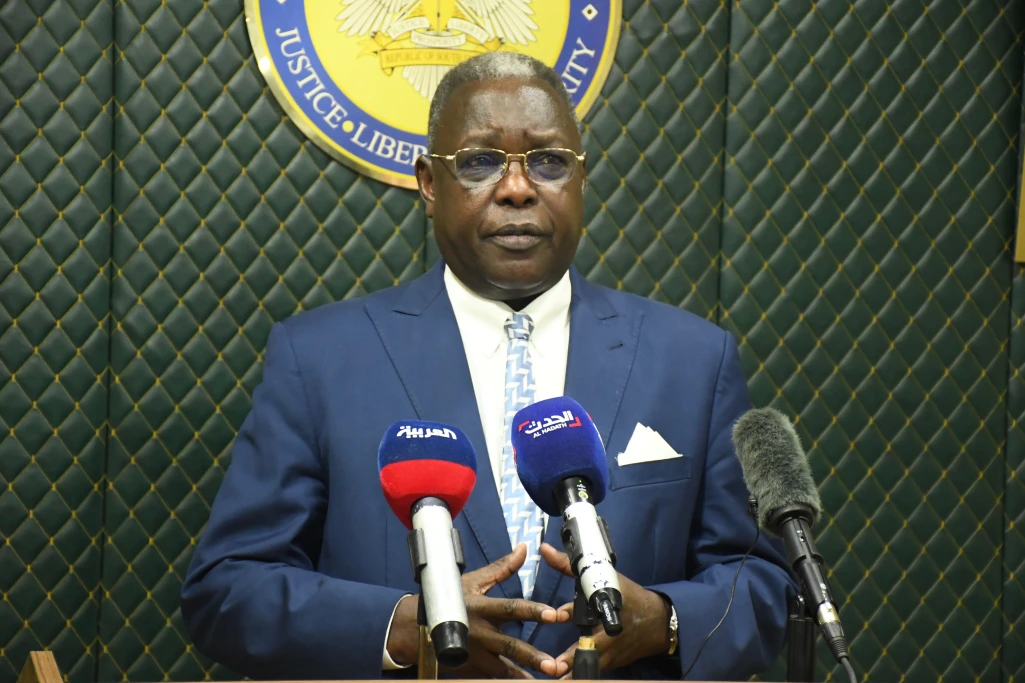
Dr. Martin Elia Lomuro, Minister of Cabinet Affairs. Credit | Daniel Garang Deng
South Sudan’s cabinet on Friday reversed plans to remove provisions establishing the legal supremacy of the 2018 peace agreement after pressure from Western governments and regional bodies warned the move could undermine the country’s fragile transition ahead of 2026 elections.
The Council of Ministers, chaired by President Salva Kiir, said
it would retain Articles 8.1, 8.2 and 8.3 of the Revitalized Agreement on the
Resolution of the Conflict in South Sudan (R-ARCSS), which place the peace
accord above the constitution and national laws during the transitional period.
Cabinet Affairs Minister Martin Elia Lomuro said amendments
would instead be limited to provisions related to transitional governance,
security arrangements and preparations for elections.
“We decided to maintain Articles 8.1 on the supremacy of the
agreement, 8.2 and 8.3, so that the amendments are restricted only to Articles
1.2.5, 1.14 and 6.14,” Lomuro told reporters after the cabinet meeting in Juba.
The decision marked a reversal from amendments submitted to
parliament earlier this month by Justice Minister Michael Makuei Lueth that
proposed repealing clauses making the peace agreement legally superior to the
Transitional Constitution and existing laws.
The proposals drew criticism from the United States, the
European Union and 17 Western diplomatic missions, which said the peace
agreement remained the basis of legitimacy for South Sudan’s transitional
government and warned against unilateral amendments.
Regional and continental bodies, including the African Union
and Intergovernmental Authority on Development, have also urged all parties to
preserve and fully implement the agreement amid delays in security reforms,
constitution-making and electoral preparations.
The dispute comes amid heightened political tensions
following the detention of First Vice President Riek Machar in March 2025 over
allegations linking him to violence in Nasir County. Machar, a key signatory to
the 2018 accord, is facing treason charges before a special court.
The Reconstituted Joint Monitoring and Evaluation Commission
has warned that amendments to the agreement require consultation and consensus
among all signatories.
Diplomatic and regional consultations led by the AU and IGAD have intensified in recent months as mediators seek to prevent further divisions within the unity government and keep the transition on track ahead of the planned elections.