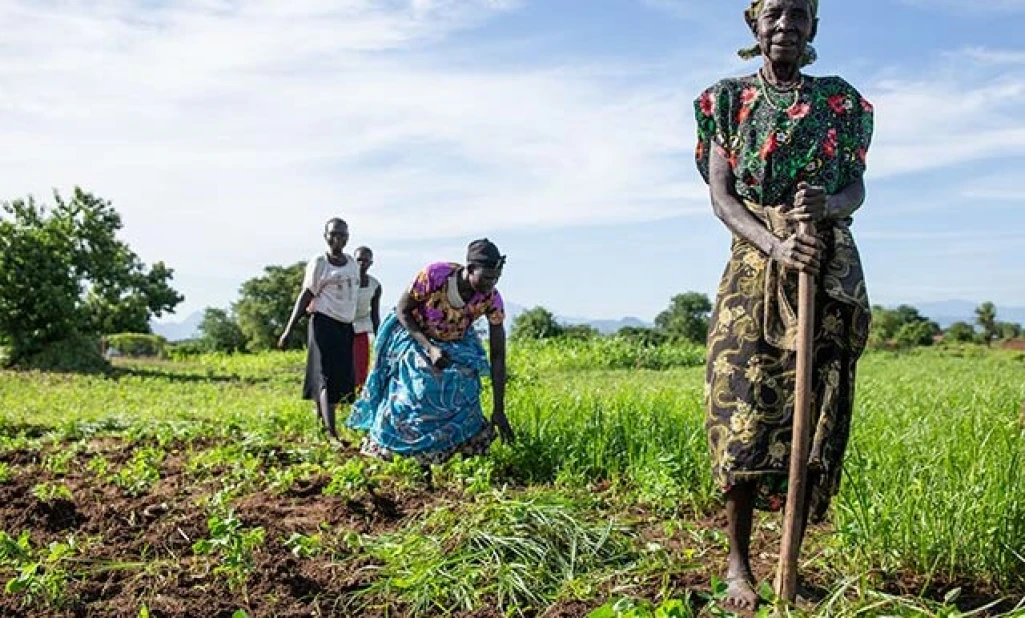
Local Farmers in Aweil, South Sudan during farming season.
Farmers in Aweil South County, Northern
Bahr el Ghazal State are raising the alarm over a pest outbreak that
is rapidly destroying crops, particularly maize, threatening this season’s
harvest and food security in the area.
The affected farmers describe the
pests as grey in color and say they are eating the interior parts of crops,
making them unfit for consumption or sale. They are now calling on the Ministry
of Agriculture and humanitarian organizations to urgently intervene before the
damage becomes irreversible.
Majok Deng Angok, a concerned farmer,
said the situation is already causing panic among residents.
“If there is no support, it will be
difficult because it will affect the community. If NGOs are present to help us,
that would be good. But without support, this pest will cause fear because it's
another season lost.”
Wek Akol, another resident, echoed
with similar concerns.
“The crops were growing well without
any challenge until this pest invaded. We are asking to be supported with
insecticides to kill and drive away these pests.”
Aluel Dhol Kuac, a local farmer,
warned that the maize harvest could be completely lost.
“These pests have really destroyed the
maize. I don’t think we will have any harvest in this area. It would be better
if the government provides insecticide to control the situation.”
In response, Dut Uchalla, Director of
Agriculture at the State Ministry, confirmed that the pests have been
identified as millipedes and fall armyworms, both known for causing serious
crop damage.
“We have already received reports
about the pest invasion,” Uchalla stated. “Millipedes and armyworms have been
detected in the affected farms. We have submitted the report to the National
Ministry in Juba, as we lack the resources at the state level to carry out
pesticide spraying.”
He advised farmers to use local
remedies such as ashes and neem leaves to protect their crops in the meantime,
while the government works on mobilizing support from the national level and
development partners.