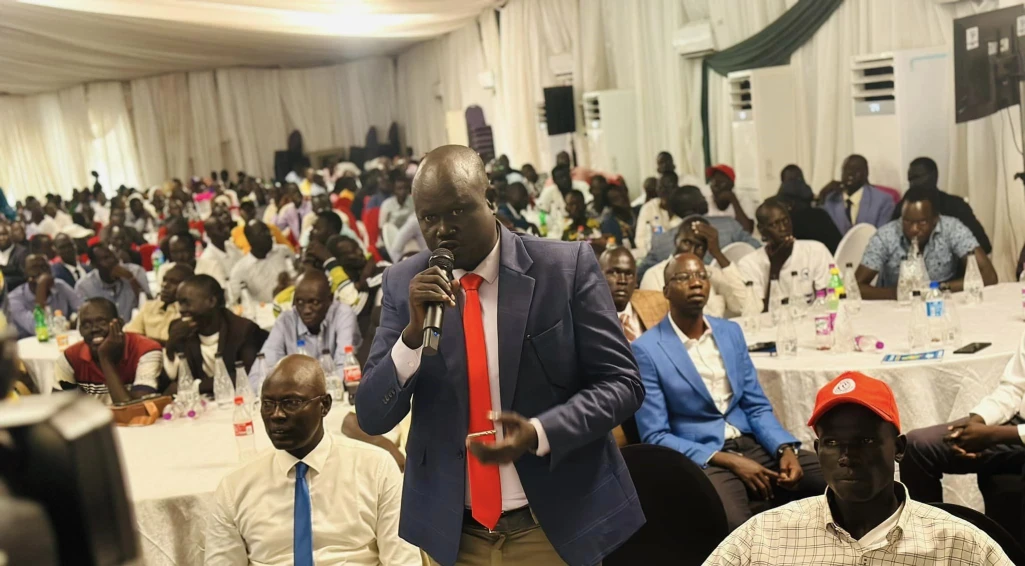
Communities in Warrap State have recommended a comprehensive disarmament of civilians and deployment of armed forces in areas affected by intercommunal violence.
According to media reports, the Twic-Abyei conflict over land ownership has raged on for over nearly two years now.
The Aguok and Kuac communities have also engaged in violent conflict over years. In addition, communities within the greater Tonj have shed blood over some disagreements.
On Tuesday, the state government organized a peace rally in Juba, bringing together government officials, youth, traditional leaders, and intellectuals.
The participants gave other recommendations, including conduct of peace conferences, civic education, and establishment of courts.
Speaking at the event, Governor Kuol Muor expressed readiness to implement the agreed recommendations with support from the youth and traditional chiefs to restore law and order, peace and social togetherness.
Some Warrap State residents welcomed the initiative while others doubted the recommendations would be implemented.
Dut Mou Dut, resident of Mayen Abun town in Twic County, said the solution is not the disarmament but the best is to block the route where the weapons get into the hands of civilians.
“Disarmament is not the solution; the solution is to identify and block where the weapons get into the hands of the civilians,” Dut said.
Some 15% of households in surveyed areas reportedly had at least one firearm, according to a baseline study conducted by Small Arms Survey.
It says if the findings for surveyed areas are extended to the entire country, this would suggest that that civilians hold between 232,000–601,000 firearms (median 397,000).
“There are too many weapons and ammunitions in the hands of the youth and there is no market where guns are sold for people to buy. So, according to me, the problem is within the government. It is not the communities who are fighting themselves. If the government want peace to come, let them start by identifying who supplies the weapons,” he argued.
For his part, Zaber Mawien, resident of Abyei town, encouraged the governor and chief administrator of Abyei to work together in the implementation of the recommendations.
“If the governor and chief administrator only meet in Juba and do not talk to each other when they are in their respective offices, then how do you want the armed youth of the two communities to respect peace?” Zaber asked.
“If you do not hear about the governor and the chief administrator not talking to the chiefs and youth in a public rallies on why violence is a bad choice, then how would you expect those carrying guns to understand the importance of peace? I want the leaders to be the exemplars.”