The process for selecting commissioners to the Commission for Truth, Reconciliation and Healing (CTRH) is drawing sharp criticism from civil society over a lack of transparency.
The Transitional Justice Working Group (TJWG) has expressed
serious concern regarding the conduct of the CTRH Selection Panel, particularly
its failure to comply with Article 10(2)(f) of the CTRH Act, 2024.
“Transparency is not optional—it is a legal requirement
under the CTRH Act. Excluding the media and public from interviews violates
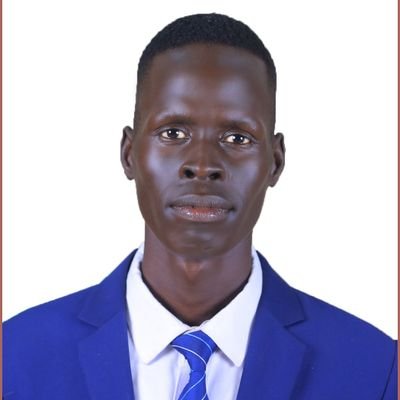
both the law and the spirit of transitional justice,” said Lony Ruot, Chair of
the Transitional Justice Working Group.
The law requires that interviews be conducted with full
participation of panel members and allow media and public observation. However,
the Selection Panel has reportedly excluded the media and the public from
attending interviews, raising serious questions about the integrity and
legitimacy of the CTRH.
“A truth commission that begins behind closed doors risks
losing public trust before it even starts its work,” Ruot added.
The CTRH is a key institution established under Chapter V of
the Revitalized Agreement on the Resolution of the Conflict in South Sudan, and
its success depends on transparency, public participation, and civil society
engagement.
“Victims and survivors must see and trust the process.
Without openness and public participation, the credibility of the CTRH is
fundamentally undermined,” Ruot emphasized.
The TJWG also pointed out that the exclusion of the media
and civil society contradicts both national and international commitments.
“The exclusion of media and civil society contradicts
national law, regional frameworks, and international standards that South Sudan
has committed to uphold,” Ruot said.
In February 2025, the Ministry wrote to stakeholders to
nominate members to the CTRH Selection Panel, which is responsible for
recruiting commissioners. The panel officially began the recruitment process
for the four South Sudanese commissioners in November 2025.
For the international commissioners, the African Union
opened an official application process in early November 2025, with
applications closing by December 1, 2025. In total, the CTRH will have seven
commissioners: four South Sudanese and three international members.
The Working Group has called on the Government of South
Sudan, the CTRH Selection Panel, IGAD, the African Union, UNMISS, and
diplomatic partners to ensure immediate compliance with the law, to reopen or
re-conduct interviews with full media and public participation, and to provide
public clarification on steps taken to align the selection process with
national law and peace agreement commitments.
“Early corrective action, reopening interviews and allowing
public observation, is essential to protect the legitimacy of the CTRH and
uphold the rule of law,” Ruot stated.
Civil society organizations, the South Sudan Bar
Association, the media, and regional and international partners have been urged
to closely monitor the process and support a transparent, inclusive, and
victim-centered establishment of the CTRH.
“A credible Commission for Truth, Reconciliation and Healing
can only be built through openness, inclusion, and respect for the rule of
law,” Ruot concluded, underscoring the importance of transparency for the peace
and transitional justice processes in South Sudan.
The selection panel was not immediately reachable for comment on the concerns raised by the civil society group.