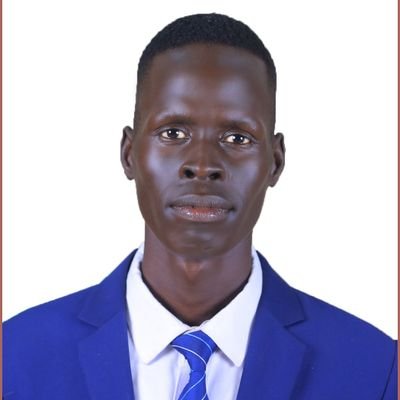
The national security service confiscated the accreditation cards of the journalists reporting for China Global Television Network, or CGTN, for filming a street in the South Sudanese capital, Juba.
Oyet Patrick, CGTN’s reporter and chairperson of the Union of Journalists of South Sudan (UJOSS), said he was on the street with his camera operator to take a piece to camera before the security personnel could intimate them and confiscate their credentials.
“Today, me and my cameraman had a not very pleasant encounter with some security personnel. In the end, our valid accreditation documents from the Media Authority were confiscated, and we are told to report to the [security] office tomorrow (Tuesday). All these are for filming a piece for the camera along the street in Juba,” Oyet said.
The Media Authority is the body mandated by law to develop and regulate the media in South Sudan. The institution issues accreditation for all the journalists in the country, permitting them to operate without hinderance.
Despite having a legal accreditation that permits them to film in the street, Oyet said they were approached by five individuals who asked about their workplace and the letter that allows them to film in the street.
“I did my PTC [piece to camera] and finished, then five guys approached us and asked which TV we worked for; we explained and showed them the logo as well. One then asked for a letter; we told him we did not need to have a letter to film, but we have accreditation from the Media Authority, which should allow us to do our work. At that point, they asked for the accreditation cards; we gave them; then they said they were going with our accreditation cards, and we were to follow them to their office the next day,” Oyet narrated.
According to Oyet, this is not the first time he is filming the same street-airport road, but he has always done it when the state is receiving dignitaries, which was not the case this day.
“I have done several PTCs in that same spot; the only issue is normally when the president or other dignitaries are using the road; this time, there was nothing as such today,” he stated.
He further said that at some point, he protested the security actions, but the personnel threatened to arrest them if they didn’t give the accreditation cards.
“I protested; I told them that it was not acceptable that they take the accreditation cards; if they had any issue, they were to call the media authority; that was the escalation of everything; they said they were going to take us in if we did not want to forfeit the accreditation cards,” Oyet explained.
The security never tempered with the gadgets or the materials recorded but made away with the journalists’ credentials and required them to visit the security office the following day.
The incident raises safety concerns among media practitioners about the anticipated December general elections. Oyet has yet to follow up on the release of their accreditations.
This is not the first time that journalists are being intimated or having their belongings confiscated; several journalists have had their gadgets confiscated inside the national parliament and expelled by the security personnel. An incident for which the parliament later had to come out and apologize.
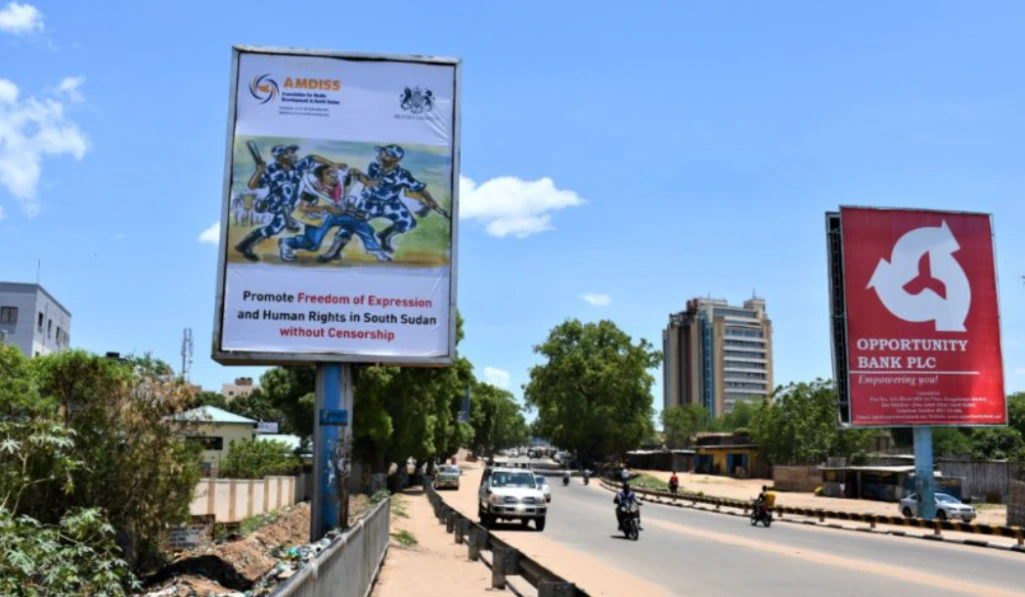
South Sudan remains a hostile environment for media practitioners and journalists, as press freedom remains hindered by censorship.
The country is also the world’s third-worst offender, according to CPJ’s 2022 Impunity Index, an annual report that spotlights countries with the worst records of impunity against journalists.