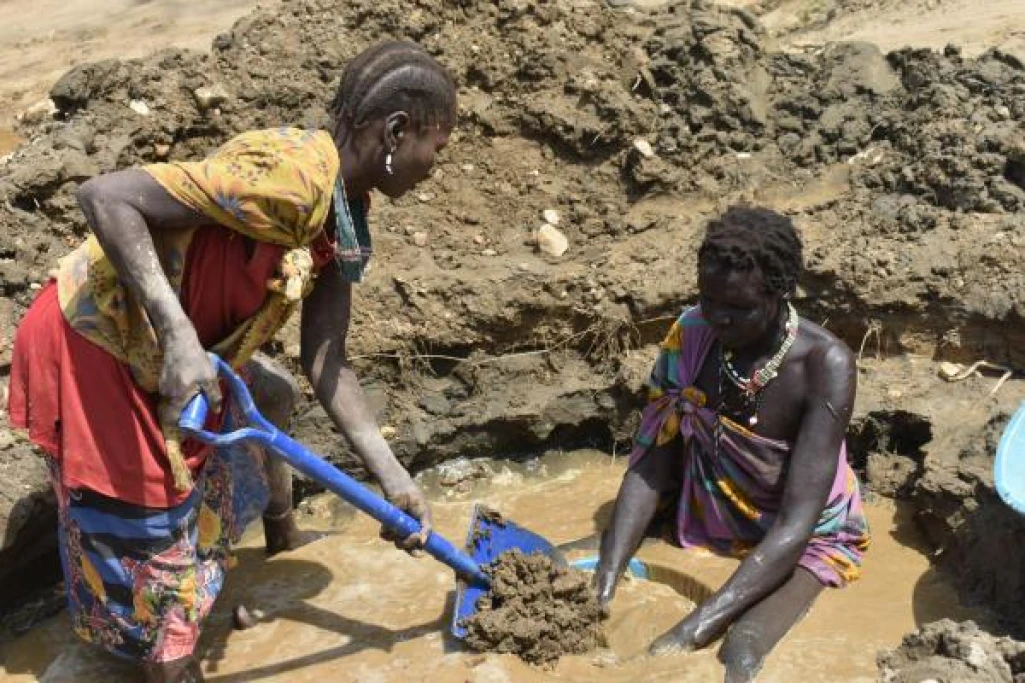
A gold mine reportedly
collapsed in Kapoeta South County on Monday, killing one woman and injuring two
more.
The tragedy
happened at the gold mining location in Natarata/Takaniyang; the victims have
not yet been recognized.
The
commissioner of Kapoeta South County, Pual Lokale, cautioned the residents to
exercise caution when harvesting gold from the sites.
“Now the
government will take measures on how people will extract gold from mines,” the
commissioner told Singaita FM, adding that “or tell them ways on how to extract
gold because this issue has been repeating itself many times.”
The majority
of the locals mines use old-fashioned methods, panning seasonal streams in
different settlements for gold.
According to
experts, the most significant and well-known locations for artisanal and
small-scale gold mining are in South Sudan; these sites are primarily located
in the Central and Eastern Equatoria states' Kapoeta area, Budi County, and
Luri river basins.
An estimated
60,000 miners are employed at 80 sites in the region, including Nanaknak, Lauro
(Didinga Hills), Napotpot, and Namurnyang. The work gives the families of
miners enough money to meet their essential necessities.
A 2020 report
by the Enough project said that the Kapoeta area's gold mining industry had
been made illegal. It stated that South Sudan's gold industry is still
uncontrolled and inadequately regulated in spite of its legal framework.